By New Vision Builders team · Published · 6 min read
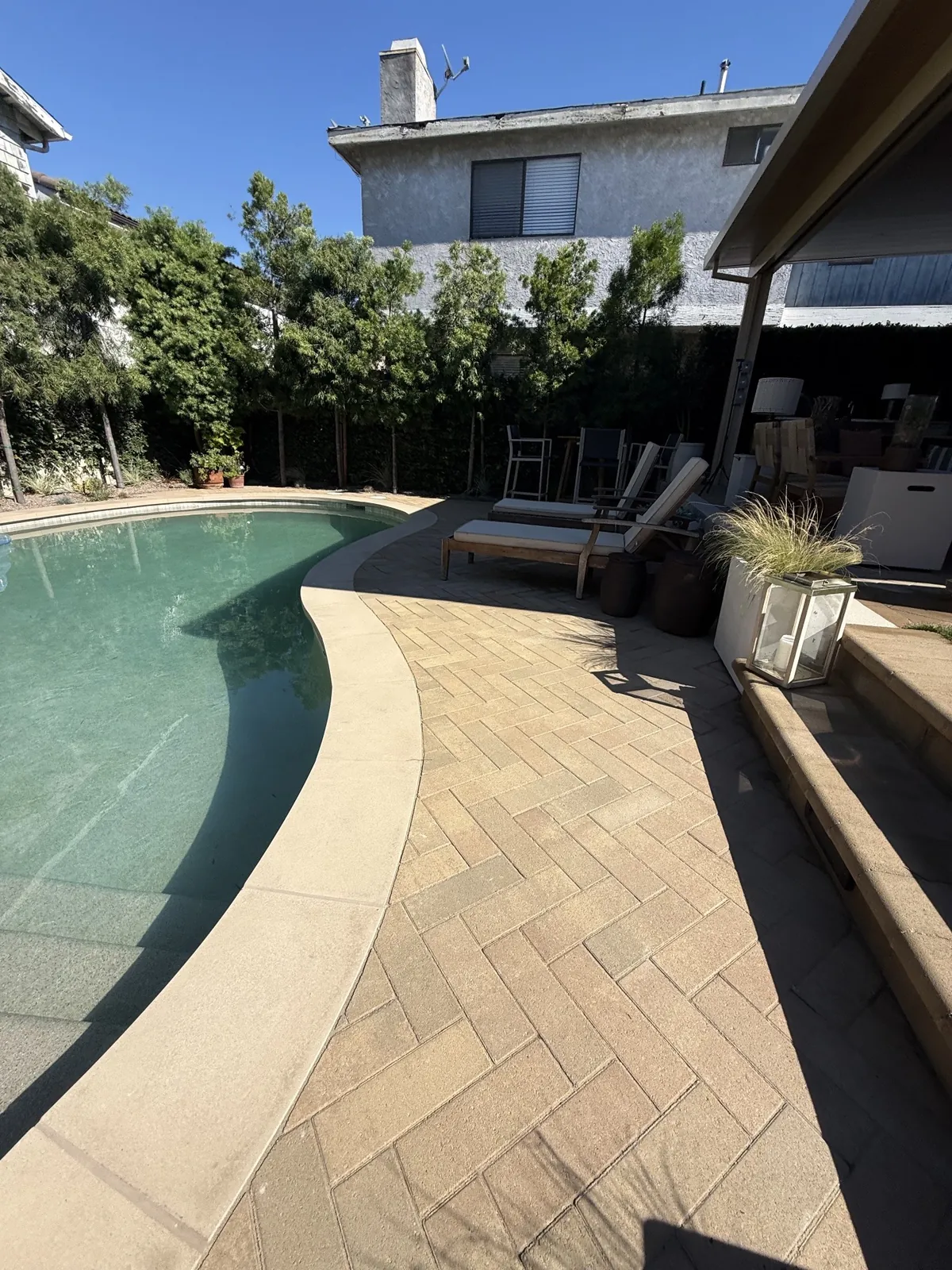
What's holding your pavers up
A paver patio or driveway is really three layers. On top are the pavers. Under them is a thin bed of sand, about an inch, that lets each paver sit flat. Under that is the part that does the real work: a layer of crushed rock base, spread in thin lifts and compacted hard, sitting on firm soil.
When people see a dip, they look at the pavers. But the pavers are just following whatever is under them. If one of those lower layers moves, the surface moves with it. Every fix starts by figuring out which layer gave up and why.
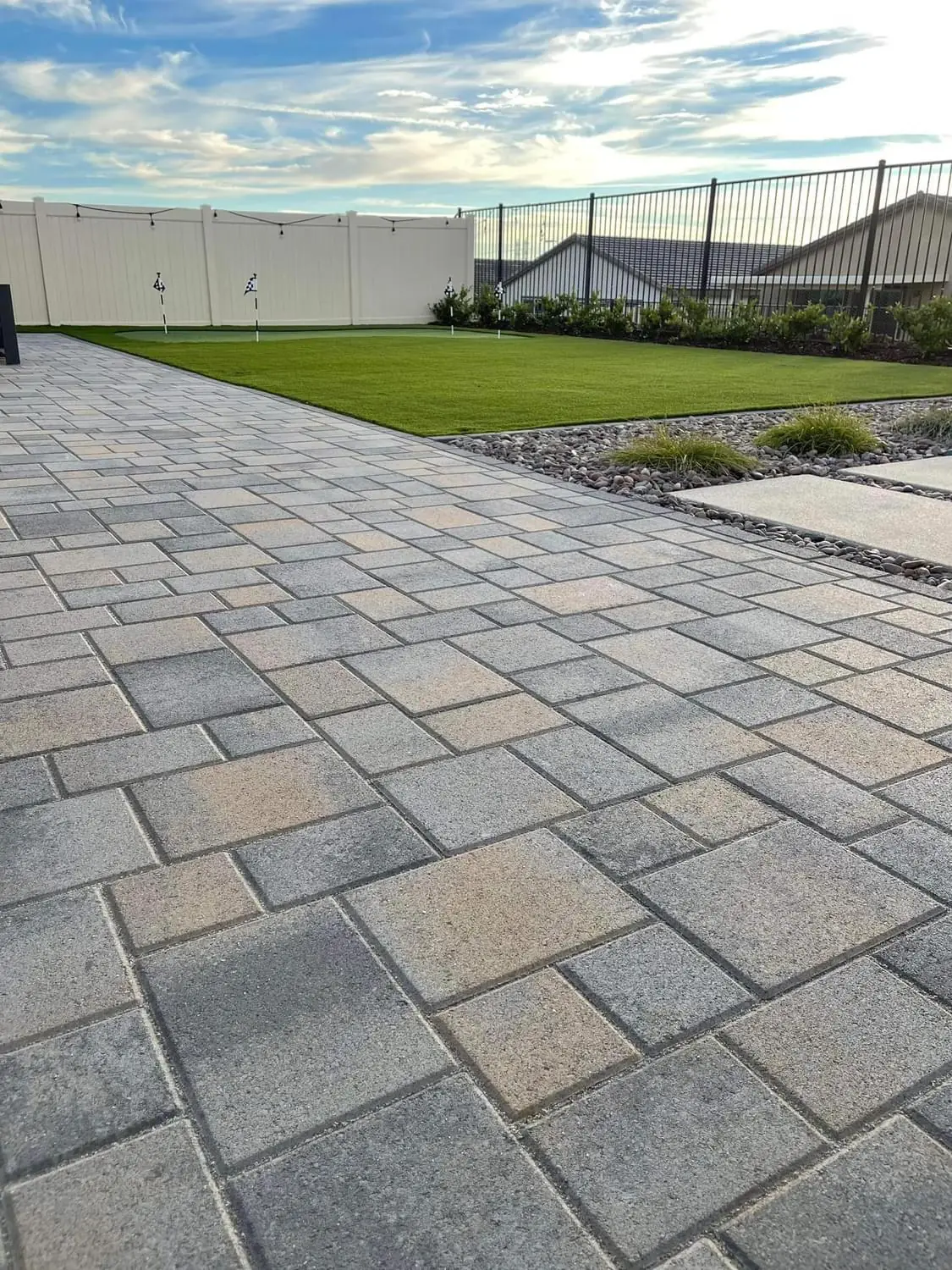
The most common reasons pavers sink
In the yards we get called to, it's usually one of a handful of things, and often two at once.
- Thin base: not enough crushed rock, especially under a driveway where cars and trucks press down every day
- Poor compaction: base dumped in one thick layer instead of compacted in thin lifts, so it keeps settling for years
- Too much sand: a thick sand bed shifts and washes out, where an inch would have stayed put
- Water: downspouts, sprinklers or a low spot soaking the base and the soil under it
- Loose edges: no edge restraint, or one that's failed, so pavers creep outward and the middle drops
- Soft or disturbed soil: old trenches for pipes, backfill around a pool, or organic soil that was never dug out
- Roots: trees lifting one area and leaving the area next to it looking low
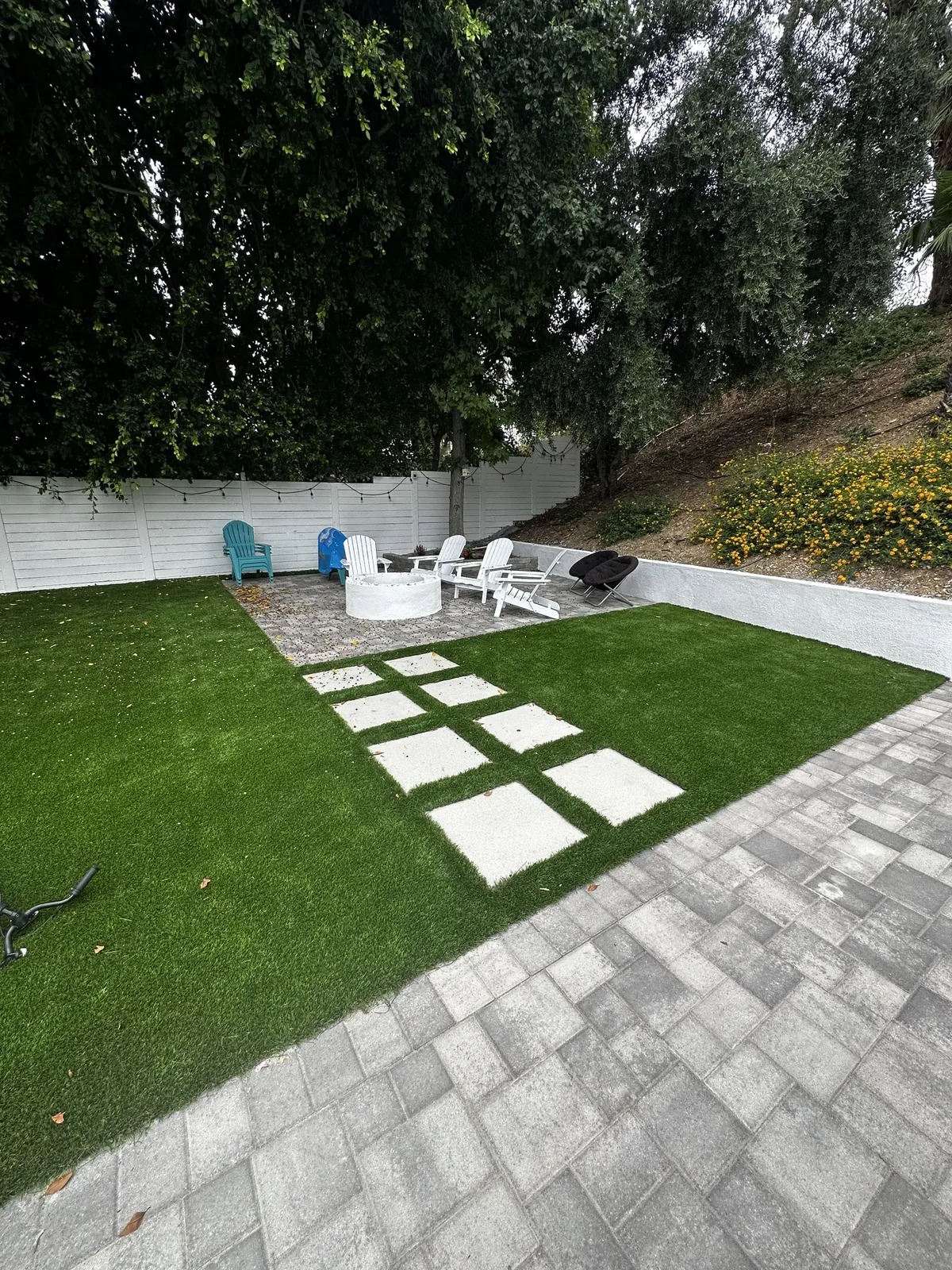
Water is usually the real culprit
If we had to pick one cause, it's water. A downspout that dumps onto the patio, a sprinkler that oversprays every morning, or a patio that slopes toward the house instead of away from it all send water into the joints and down into the base. Over time that water carries fine material out and softens the soil underneath.
A lot of LA and Orange County neighborhoods sit on clay soil. Clay swells when it's wet and shrinks when it dries, so a yard that goes from a dry summer to a wet winter can move more than you'd think. A well-built base and good drainage keep that movement from showing up on top.
Look at where the dip is. If it lines up with a downspout, an irrigation head, or the low corner of the patio, you've probably found your answer.
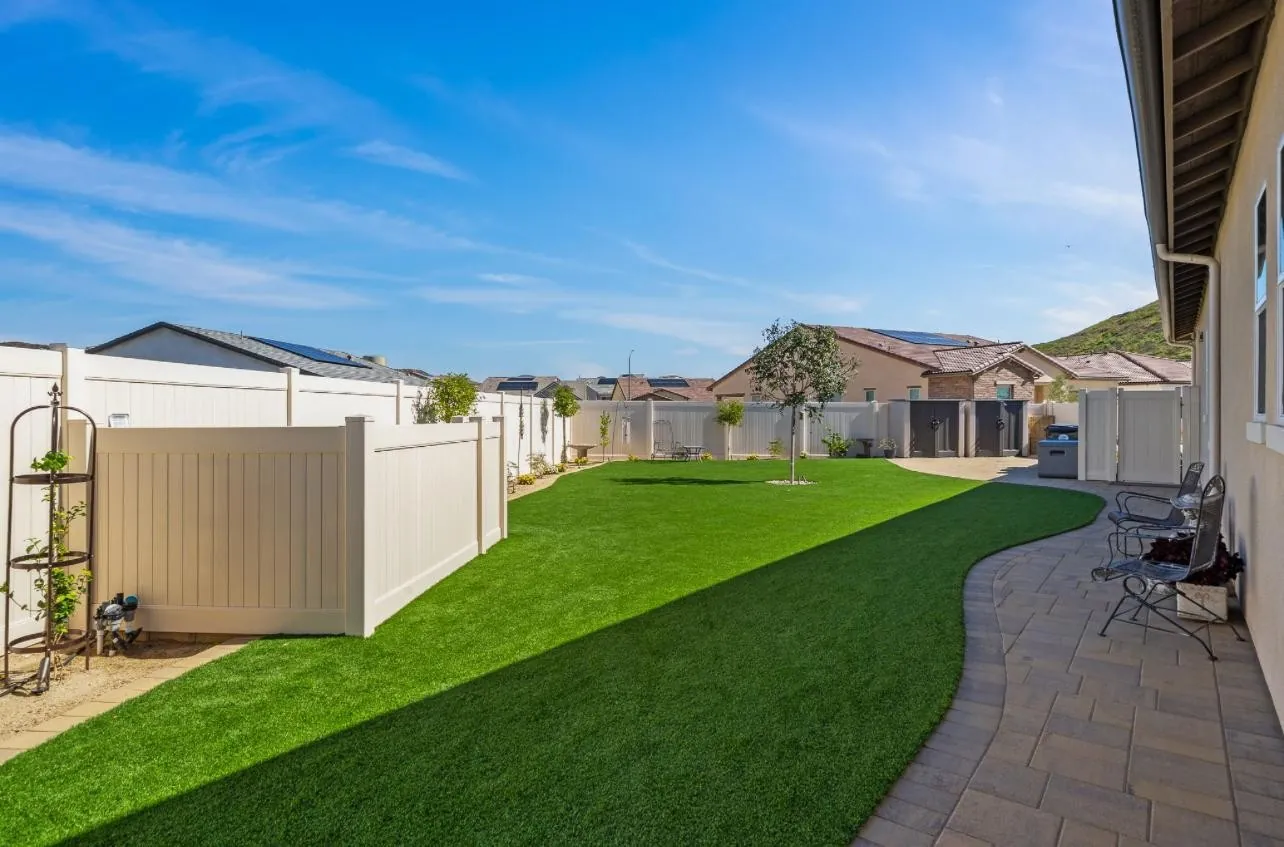
How we fix sunken pavers
The good news is that this is exactly what pavers are made for. Unlike a cracked concrete slab, you don't have to tear out the whole thing or live with a patch that doesn't match. We fix the spot and reuse the same pavers.
- Pull the pavers in the low area, plus a little past it, and set them aside in order
- Dig out the old sand and any wet or loose base until we hit firm material
- Add crushed rock in thin lifts, compacting each one with a plate compactor
- Screed a fresh, even sand bed and reset the original pavers to match the pattern
- Compact the surface, sweep in new joint sand, and lock it in
- Fix the cause: reroute the downspout, adjust sprinklers, repair the edge restraint or add a drain
When it's more than a low spot
One small dip is a repair. Dips all over the patio, pavers spreading at the edges, or a driveway with ruts where the tires go usually mean the base was never built right in the first place. Patching one spot at a time won't keep up.
In that case it's often smarter to lift the whole area, rebuild the base to the depth it needs, and relay the pavers. Driveways need a noticeably deeper base than a patio you only walk on, and soft or clay soil can call for more depth or a fabric layer under the rock. If the pavers are in good shape, most of them can go right back down. If there's a drainage problem, this is the time to add a drain or change the slope, while everything is open.
How to keep pavers from sinking
Most of this is decided on the day the pavers go in. On a new install, the base depth, the compaction and the edge restraint matter more than the paver you pick. After that, a little upkeep keeps the surface tight.
- Keep downspouts and sprinklers aimed away from the pavers
- Make sure the surface slopes away from the house so water runs off
- Top up joint sand when you see gaps, so pavers stay locked together
- Reseal every few years if you use a sealer, to help keep joints tight
- Fix a small dip early, before water starts collecting in it and makes it bigger
- Keep heavy trucks, dumpsters and equipment off patios that weren't built for them
A tip from the field
Next time it rains, or right after the sprinklers run, walk out and look at the pavers. Note where water stands and where it's coming from. Snap a photo. That one look tells us more about why a patio is sinking than anything else, and it's often the difference between a quick repair and a repair that has to be done again next year.
Questions we get
Can sunken pavers be fixed without replacing them?
Yes, in most cases. We lift the pavers in the low area, rebuild and compact the base, and reset the same pavers. Only cracked or badly stained pieces need to be replaced.
Why are my new pavers already sinking?
On a newer install it's almost always the base: not deep enough, not compacted in layers, too much sand, or no solid edge restraint. Water draining onto the area makes it show up faster.
Can I just add sand under a sunken paver?
It might look better for a while, but extra sand usually shifts and washes out again. A lasting fix means getting down to the base, compacting it, and dealing with the water or edge that caused the dip.
Does polymeric sand stop pavers from sinking?
Not by itself. Polymeric sand keeps joints tight and helps with weeds and ants, but sinking comes from what's under the pavers. It's part of good upkeep, not a fix for a weak base.