What moves the cost
Both need demo, haul-off and a good base. Concrete goes faster once the forms are set. Pavers take more labor because every piece is laid and cut, but there's no curing time. Finish, pattern, access and prep move the cost as much as the material does, so when you're on the fence we price both on the site walk.
How each one holds up
Concrete cracks. Good joints, rebar and a solid base control where it cracks, but a slab is one piece and LA soil moves. When concrete cracks, the fix is a patch that shows or a new slab.
Pavers flex. Hundreds of small units move with the ground instead of breaking. If one stains or a tree root lifts a section, we pull those pavers and reset them. That's the main reason we like pavers around trees and on clay soil.
Looks
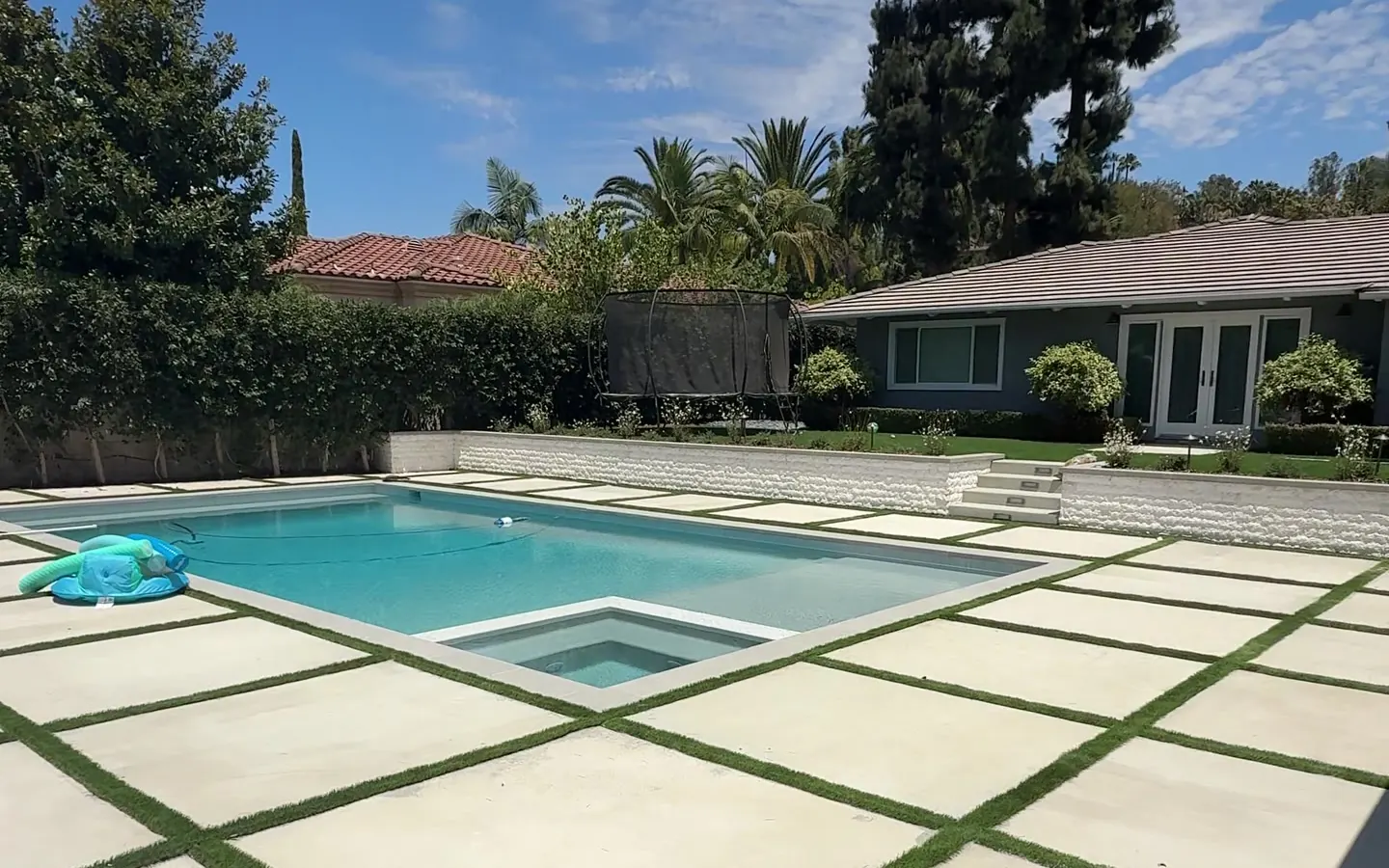
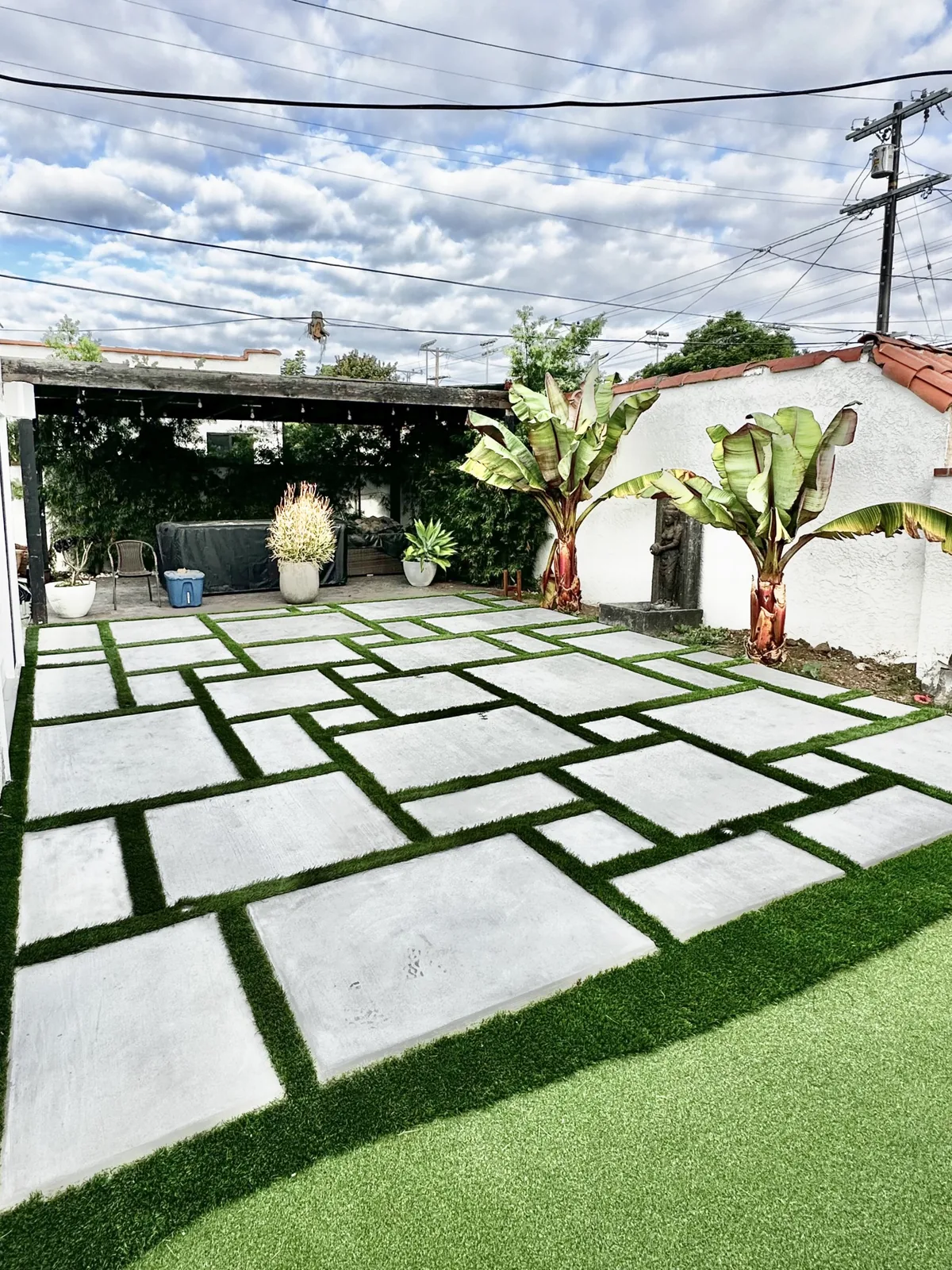
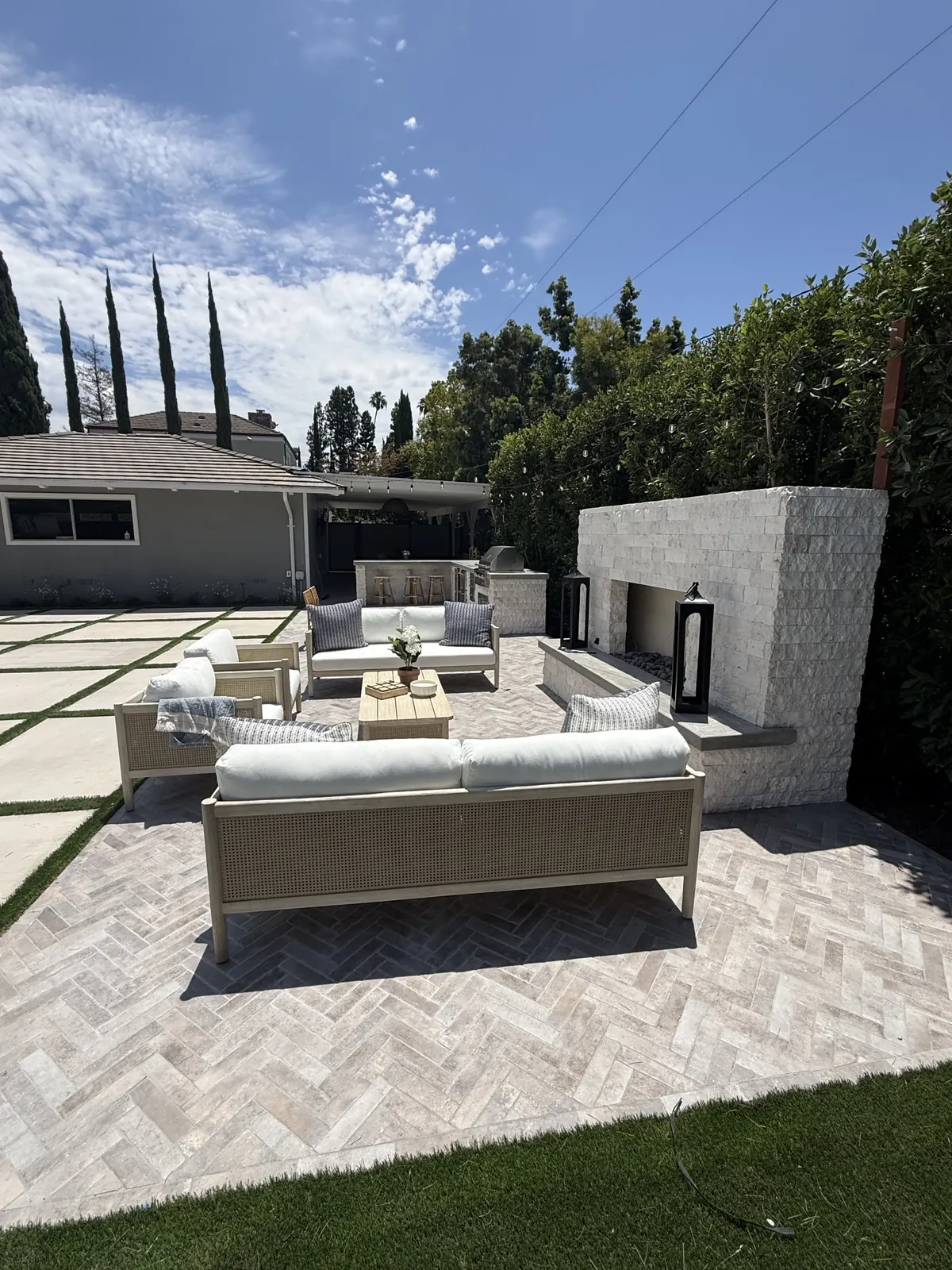
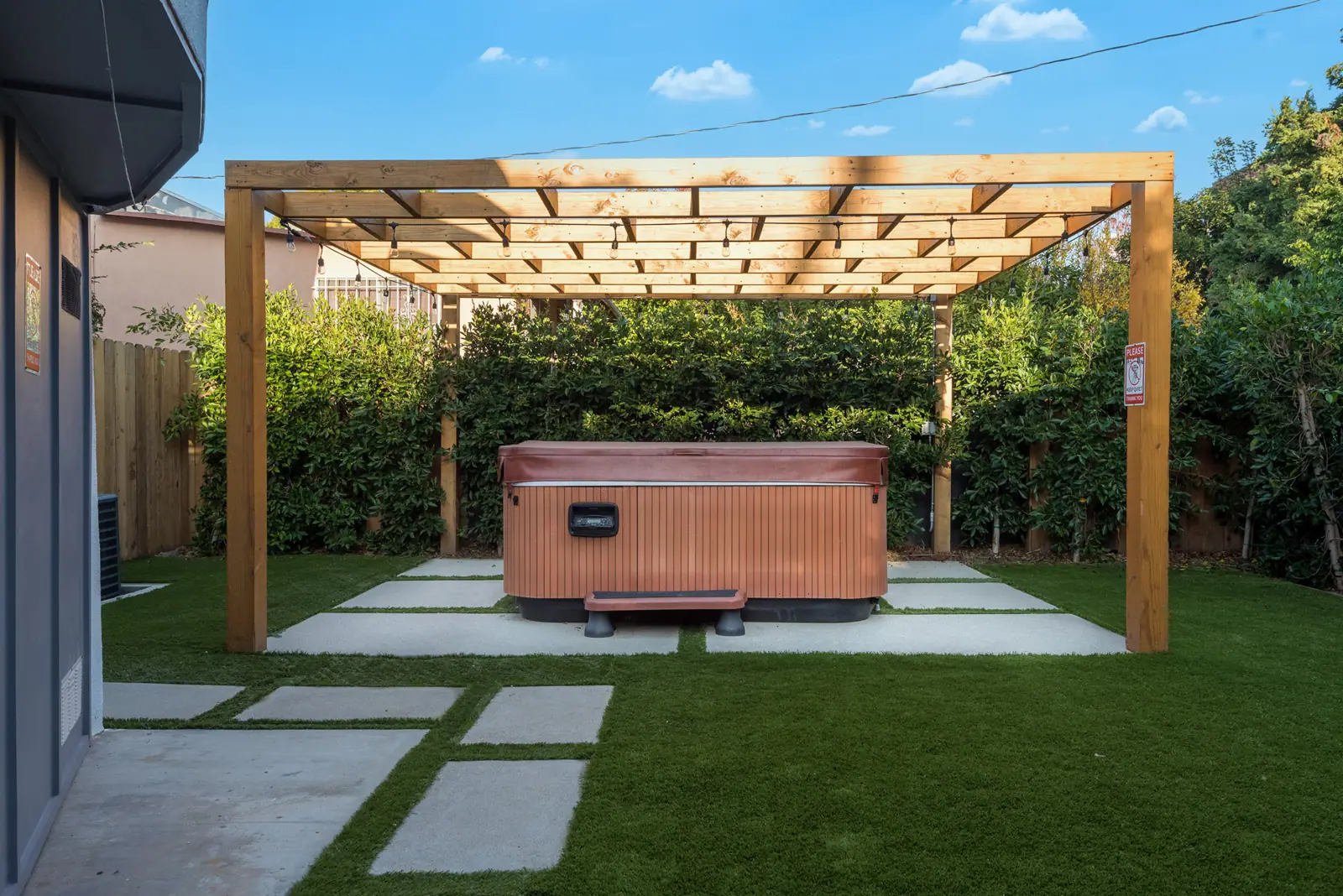
Concrete has gotten good. Large-format pads with turf or gravel joints, smooth or sand finish, are some of our favorite modern pool decks. Pavers give you patterns, borders and color mixes, from herringbone to travertine. Neither one is the cheap option when it's done right.
- Choose concrete for clean modern pads, big open slabs and the fastest install
- Choose pavers for patterns, around trees, on moving soil, and where you want easy repairs
- Mix them: concrete pads with paver borders, or concrete paths and a paver patio
Driveways and walkways
A driveway carries a car's weight every day, so either material needs a deeper base. Concrete driveways go in fast and look clean, but expect a control joint pattern and some hairline cracks over the years. Paver driveways handle tree roots and settling better, and a stained section can be swapped out. For walkways, concrete gives a smooth, simple path, and pavers make it easy to add curves and borders.
Permits and timeline
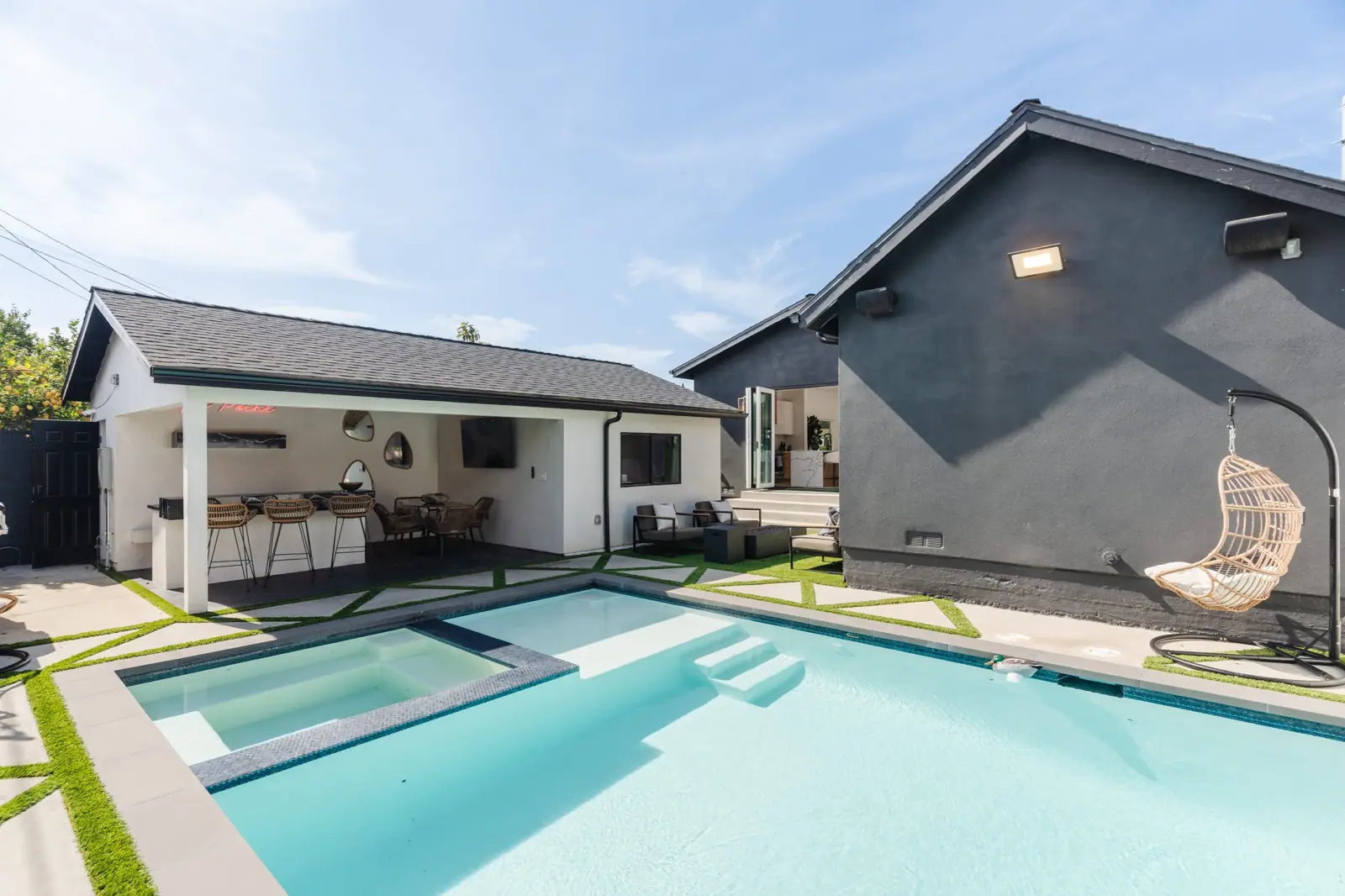
Backyard flatwork in either material usually doesn't need a building permit. Driveway approaches and anything in the public right-of-way need a public works permit, and some cities limit front yard paving. Concrete is usually poured within a week of starting, then needs a few days before heavy use. Pavers can be walked on as soon as the joints are sanded.
Heat, kids and pets
Light-colored concrete and travertine stay cooler than dark pavers. A broom or sand finish gives more grip than smooth concrete. Around pools we steer people toward lighter colors and textured finishes, whichever material they pick.
Upkeep
Concrete needs a reseal every few years if you want it to keep its color, and some cracking comes with owning it. Pavers need joint sand topped up and an occasional reseal. Polymeric sand and a good base keep weeds out of the joints. Neither one is high maintenance.
Our take
If you want clean modern lines, go concrete and spend on the base and joints. If you want something you can repair forever, go pavers. If you're not sure, we bring samples to the site walk and price both, so you can decide with real numbers for your yard.
Questions we get
Is concrete always the cheaper option?
Not always. Finish, pattern, access and site prep often move the cost more than the material. We price both on a free site visit so you can compare.
Do pavers crack like concrete?
Single pavers can chip, but the patio flexes instead of cracking as one piece, and damaged pavers can be swapped out.
Which is better for a pool deck?
Both work. Concrete pads with turf joints give a clean modern look; pavers or travertine stay cooler and are easy to repair.
Can you mix pavers and concrete?
Yes, and we do it often: concrete pads with paver borders, a concrete driveway with a paver walkway, or concrete paths that lead to a paver patio.
Which is better for a driveway?
Both work with the right base. Pavers handle moving soil and repairs better; concrete goes in faster. A new driveway approach needs a city permit either way.
Every yard is different. We price on a free site visit.