What you're paying for
The pavers you see are maybe a third of the job. The rest is underneath: digging out the old surface, hauling it, a compacted base, edge restraints and sand. That's what keeps a patio flat for twenty years instead of sinking by the second winter.
- Demo and haul-off of old concrete, grass or dirt
- Base depth: more for driveways, less for walkways
- Paver type: concrete pavers, travertine or porcelain
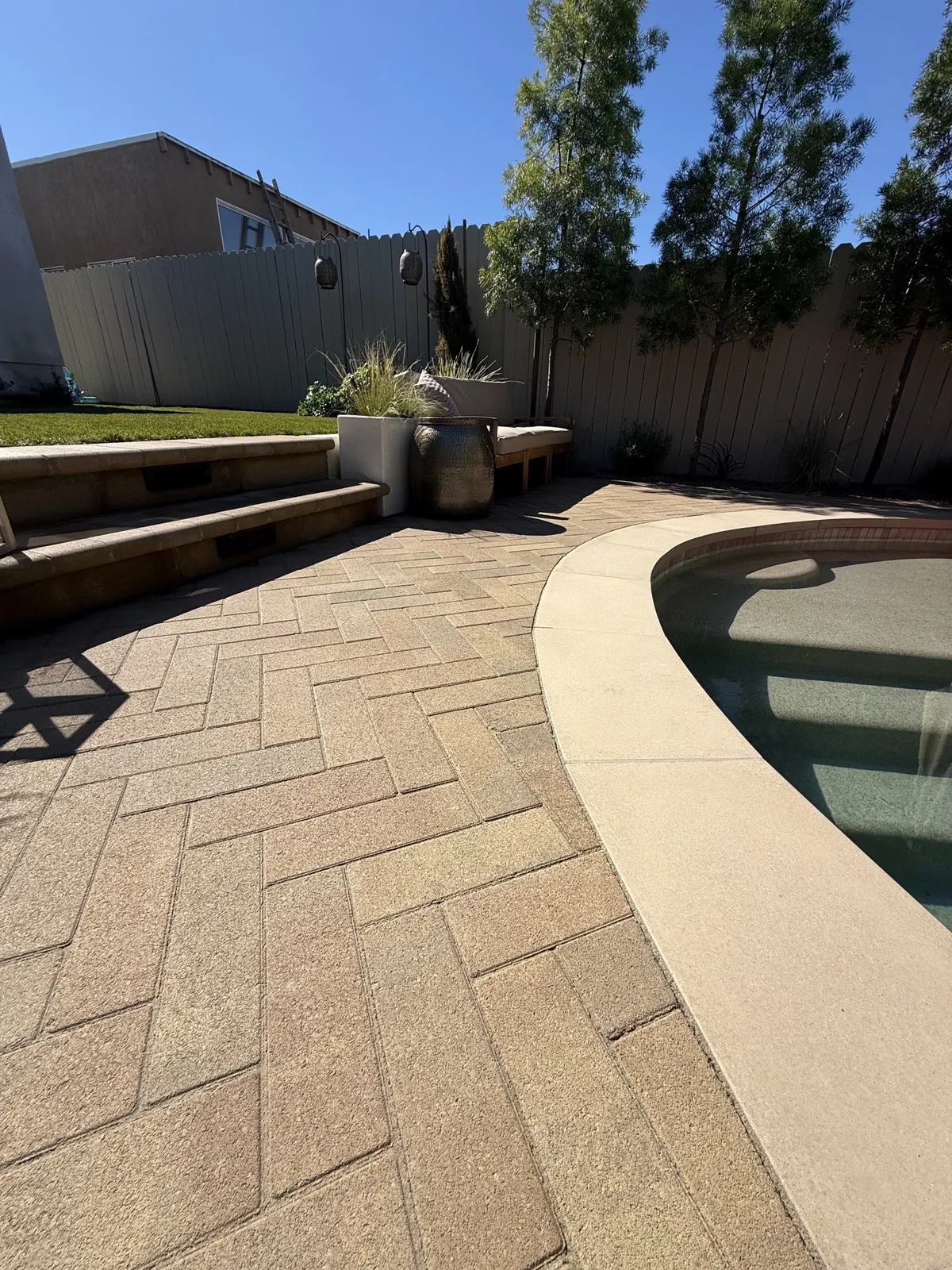
- Pattern: herringbone and borders mean more cuts
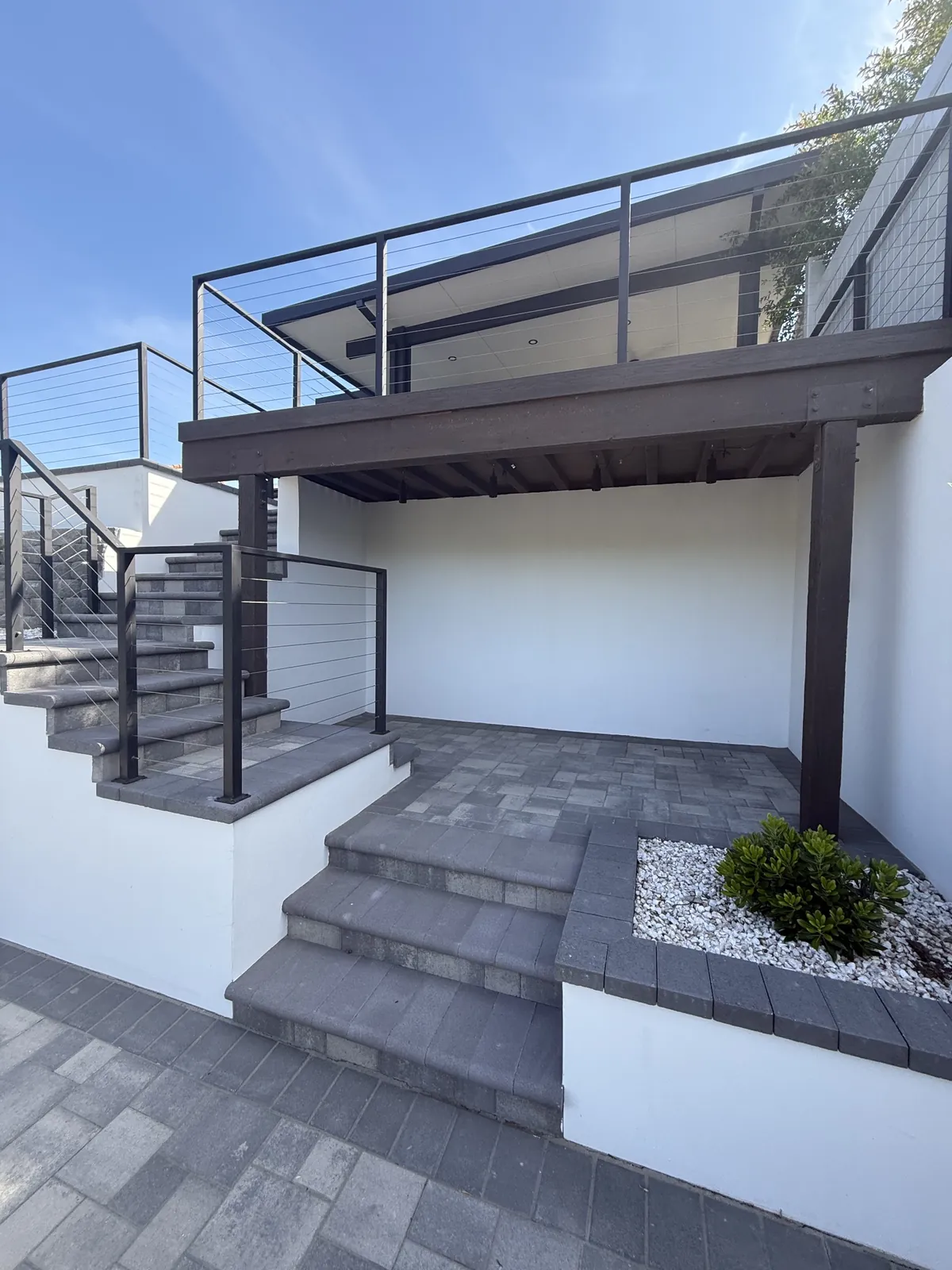
- Steps, curves and borders
- Drainage, so water goes where it should
Access and site prep
If a skid steer can drive into the yard, demo and base go fast. If every load of old concrete and new rock goes through a narrow side gate in a wheelbarrow, the same patio takes more days and more hands. Slopes, old roots and soft soil add prep too. We look at all of it on the site walk before we write anything down.
Small jobs cost more per foot
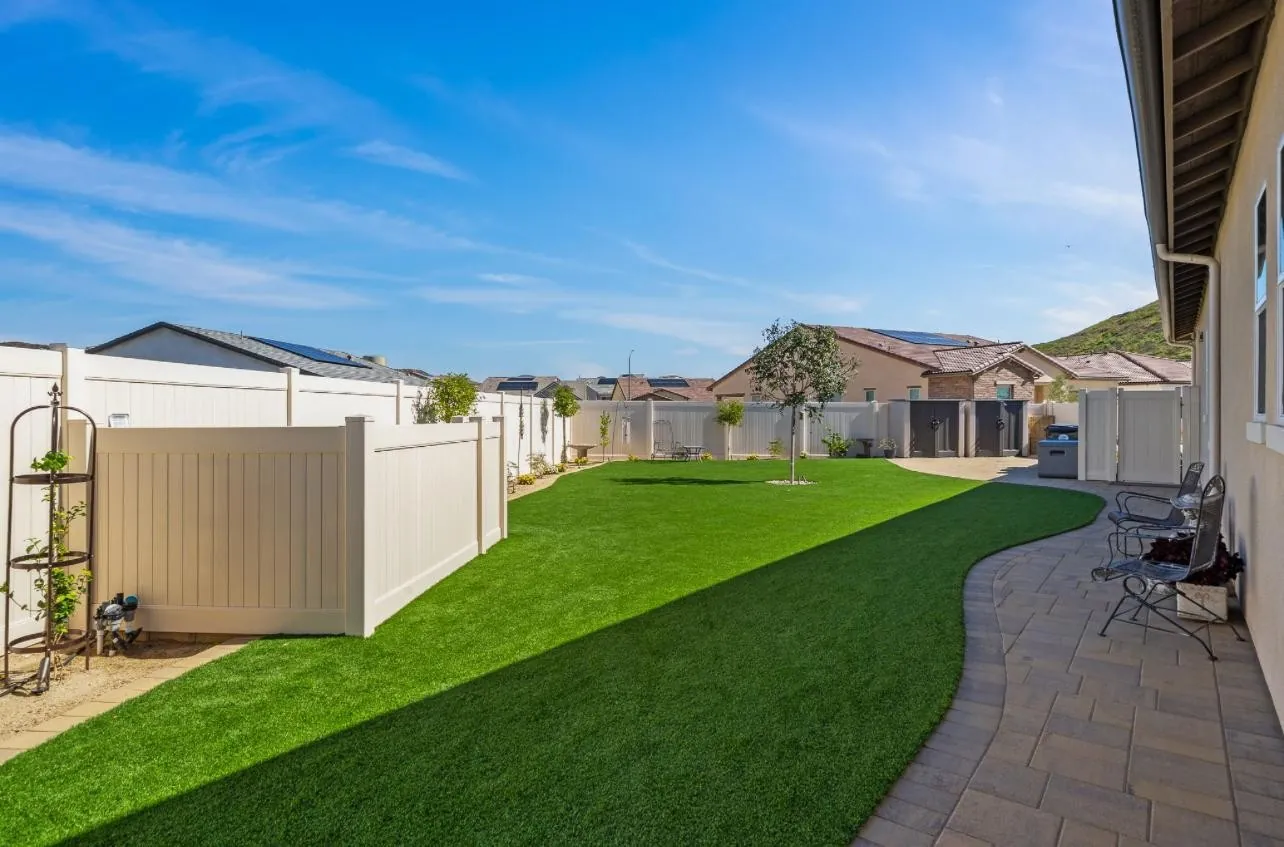
Every job has trucks, a crew and a compactor showing up. On a small walkway that setup is spread over fewer feet, so small jobs cost more for each foot of paving. Doing the patio, walkway and side yard in one go is usually cheaper than doing them a year apart.
Concrete pavers, travertine or porcelain
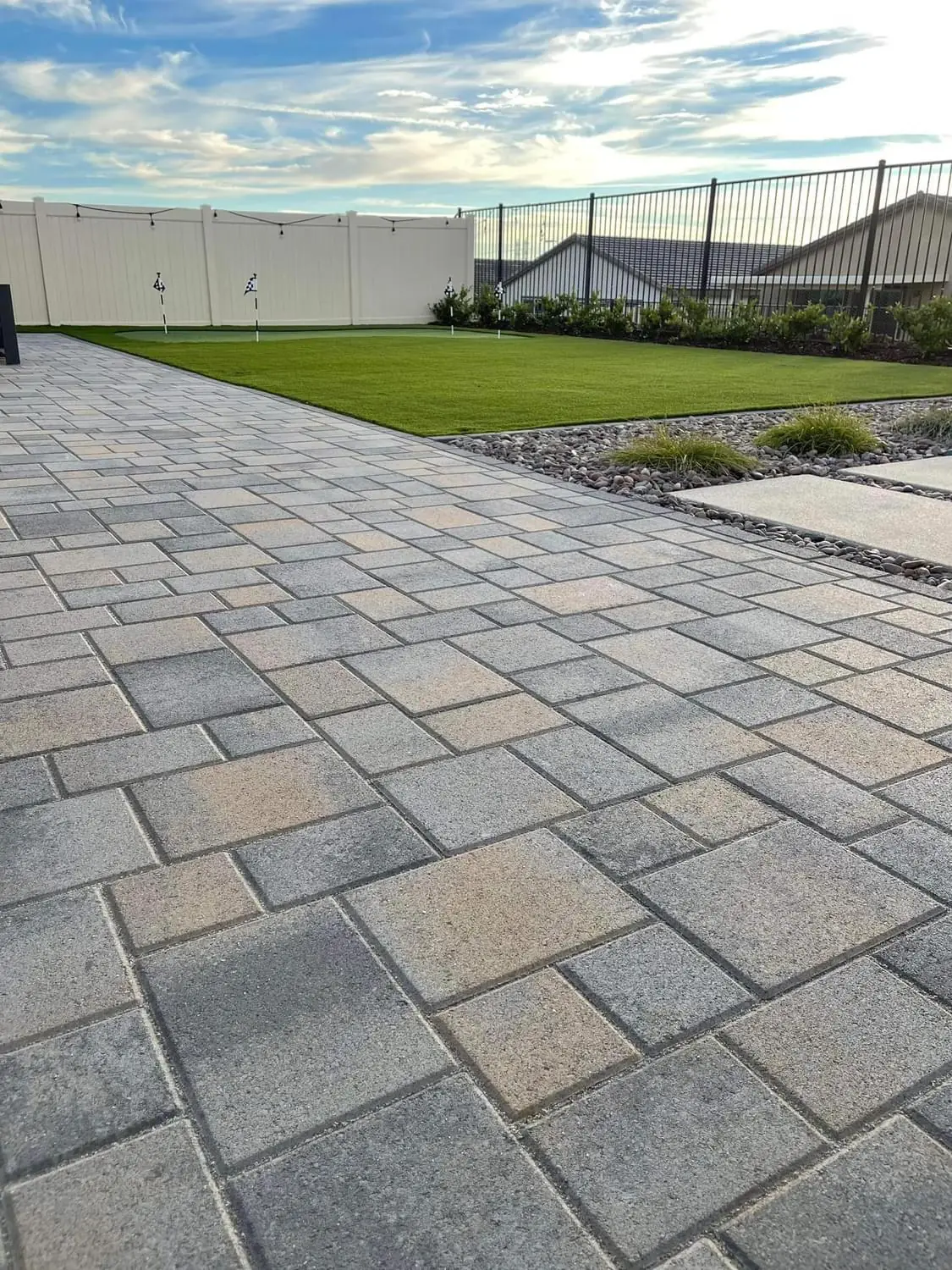
Concrete pavers are the most common and the most affordable. Travertine costs more, stays cooler under bare feet and is a favorite around pools. Porcelain pavers cost the most: thin, sharp and modern, and they need a different setting method. We bring samples to the site walk so you see them in your own light.
Patio, walkway or driveway
A driveway carries cars, so it gets a deeper base and thicker pavers than a patio. That's why driveways cost more per foot. Walkways are narrow, which means more edges and cuts for every foot. A big open patio is the most efficient shape to pave.
What a good paver quote shows
Ask for the base depth in inches, the paver brand and line, the pattern, how the edges are held in place and where the water goes. If a quote doesn't say, ask. Those lines are what separate a patio that stays flat from one that doesn't.
Permits
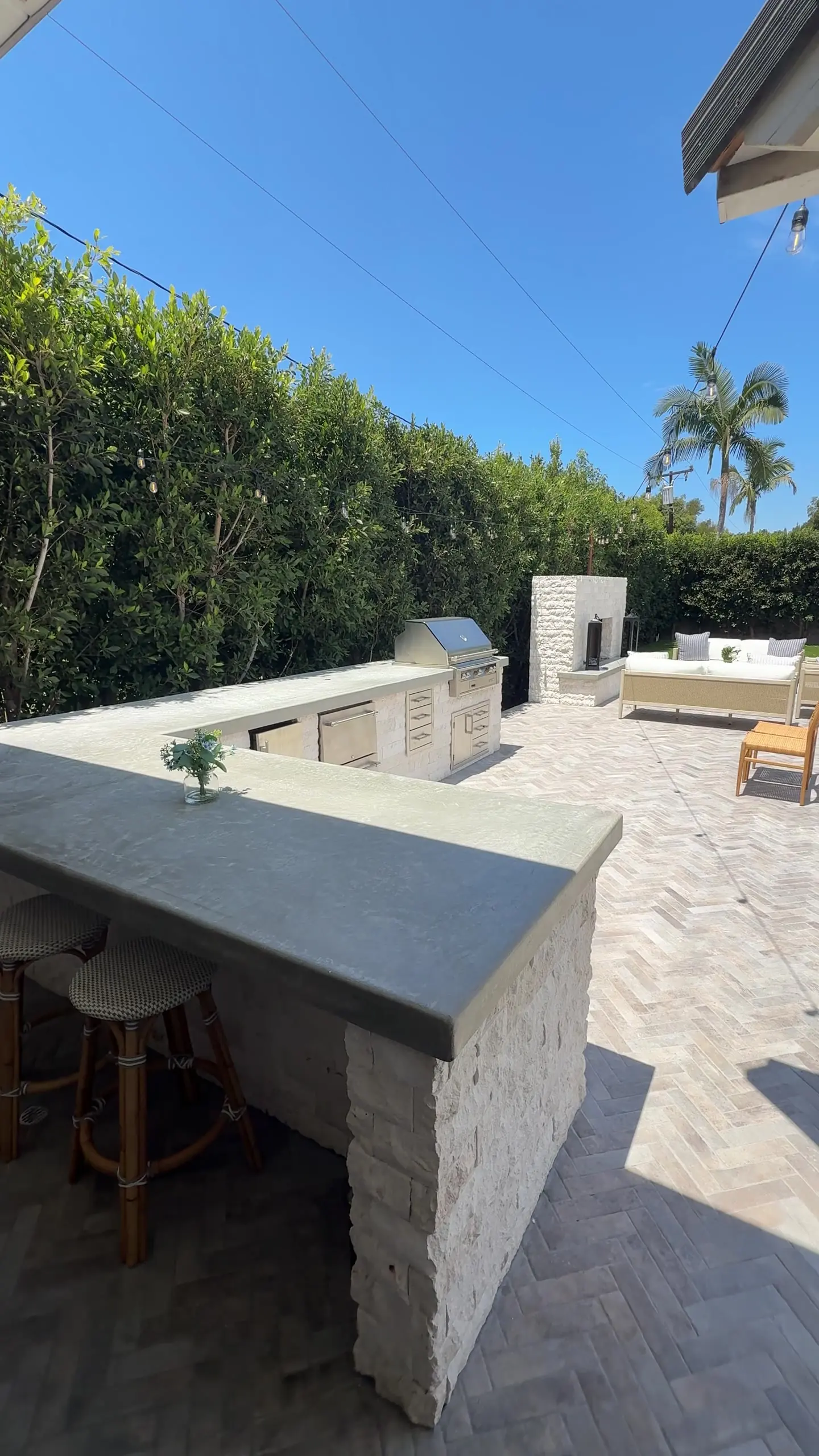
A backyard paver patio usually doesn't need a building permit. Some cities limit how much of a front yard can be paved, and anything touching the sidewalk or the driveway approach needs a public works permit. Hillside lots and drainage changes can bring the city in too. We check your city before we quote and pull what's needed.
Timeline
A typical backyard patio takes one to two weeks on site: a day or two of demo, a few days of base and compaction, then laying, cutting and sanding the joints. Rain pushes base work, so winter jobs can run longer.
How to save
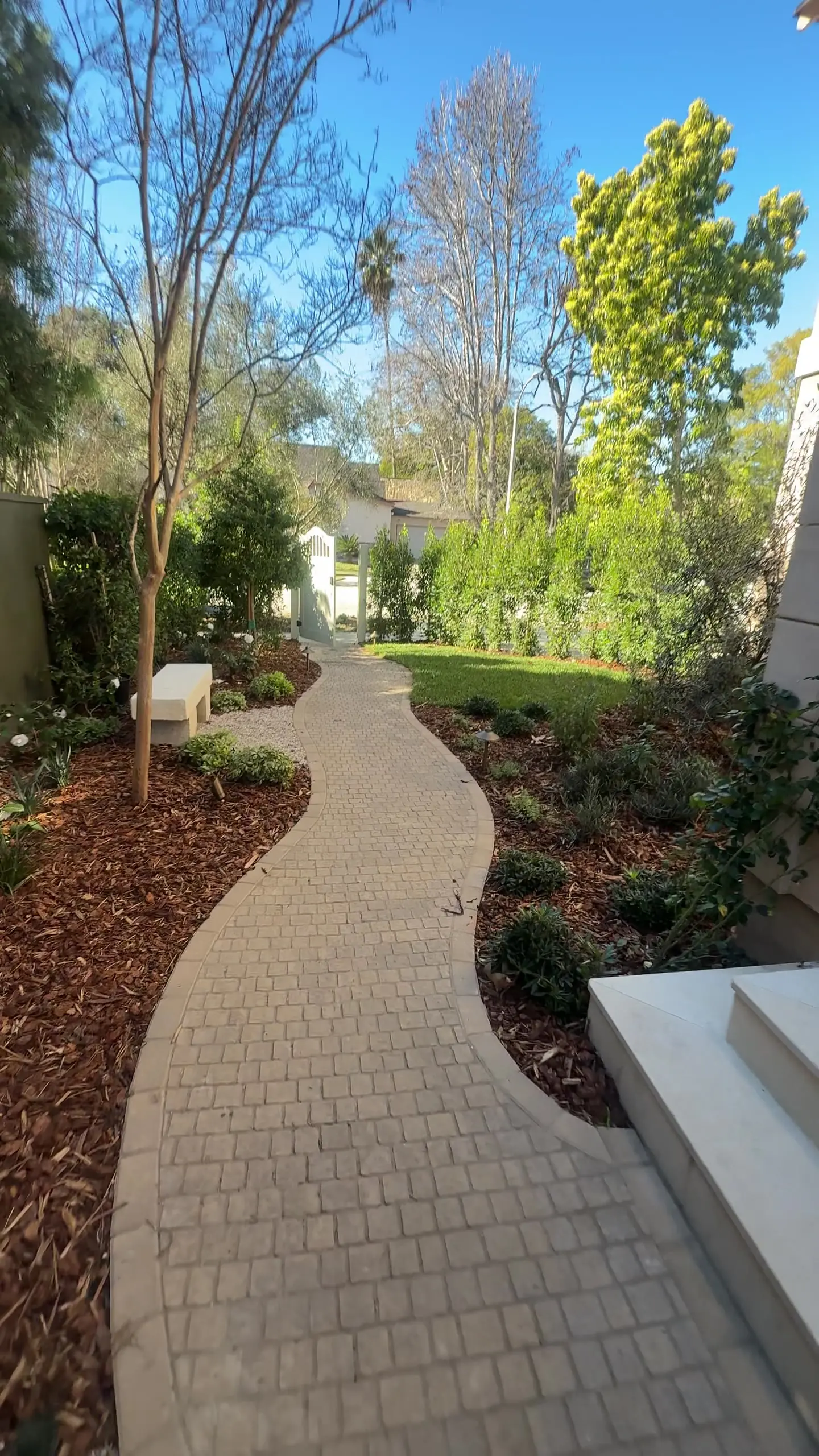
Pick a standard paver and a simple running bond or basketweave pattern. Keep curves to where they matter. Combine paver areas with turf or gravel to cut the square footage. Don't skimp on base depth. It's the cheapest part to do right and the most expensive to redo.
Questions we get
What makes a paver patio cost more?
Tight access, a lot of demo, a deeper base for driveways, premium pavers like travertine or porcelain, and patterns with lots of cuts. We price your yard on a free site visit.
Do I need a permit for a paver patio?
Usually not for a backyard patio. Front yards, driveway approaches and drainage changes can need one. We check your city.
How long does a paver patio take?
Most backyard patios take one to two weeks on site.
Are pavers good around a pool?
Yes. Pavers and travertine are common pool decks. Travertine stays cooler, and pavers can be pulled and reset if the deck ever needs work.
Can pavers go over my old concrete?
Sometimes, if the slab is flat, sound and drains right. It raises the height, which can cause trouble at doors and steps, so most of the time we remove it and build a proper base. We'll tell you which on the site walk.
Every yard is different. We price on a free site visit.