By New Vision Builders team · Published · 6 min read
The short version
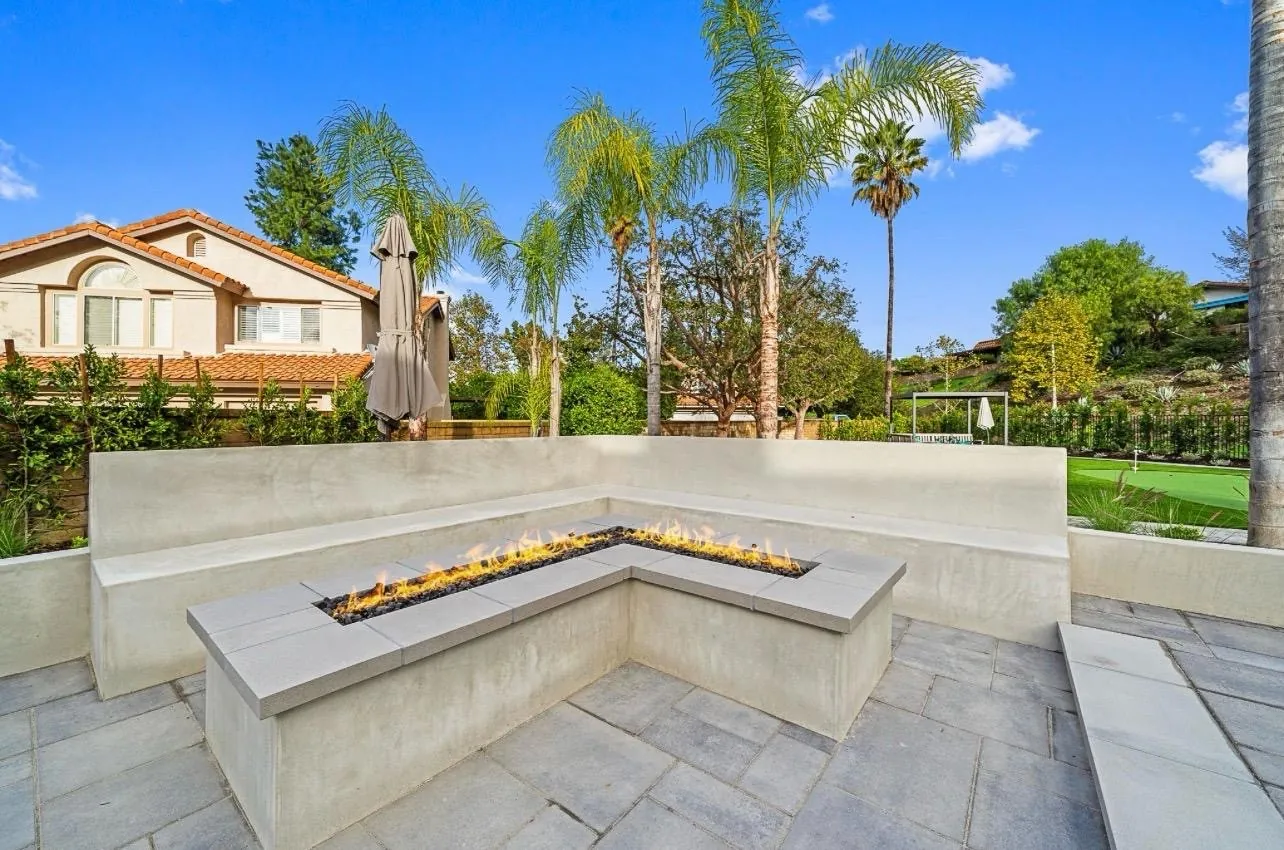
Both give you a place to sit outside after dark. The difference is how much work the fire takes and what it's like to sit next to it.
Gas is about ease. You turn it on, it's lit, and when you're done you turn it off and walk inside. Wood is about the experience: the sound, the smell, the real heat coming off a bed of coals. It also comes with smoke, ash and a few rules you need to know about if you live in the LA basin.
Gas: clean, quick and easy to live with
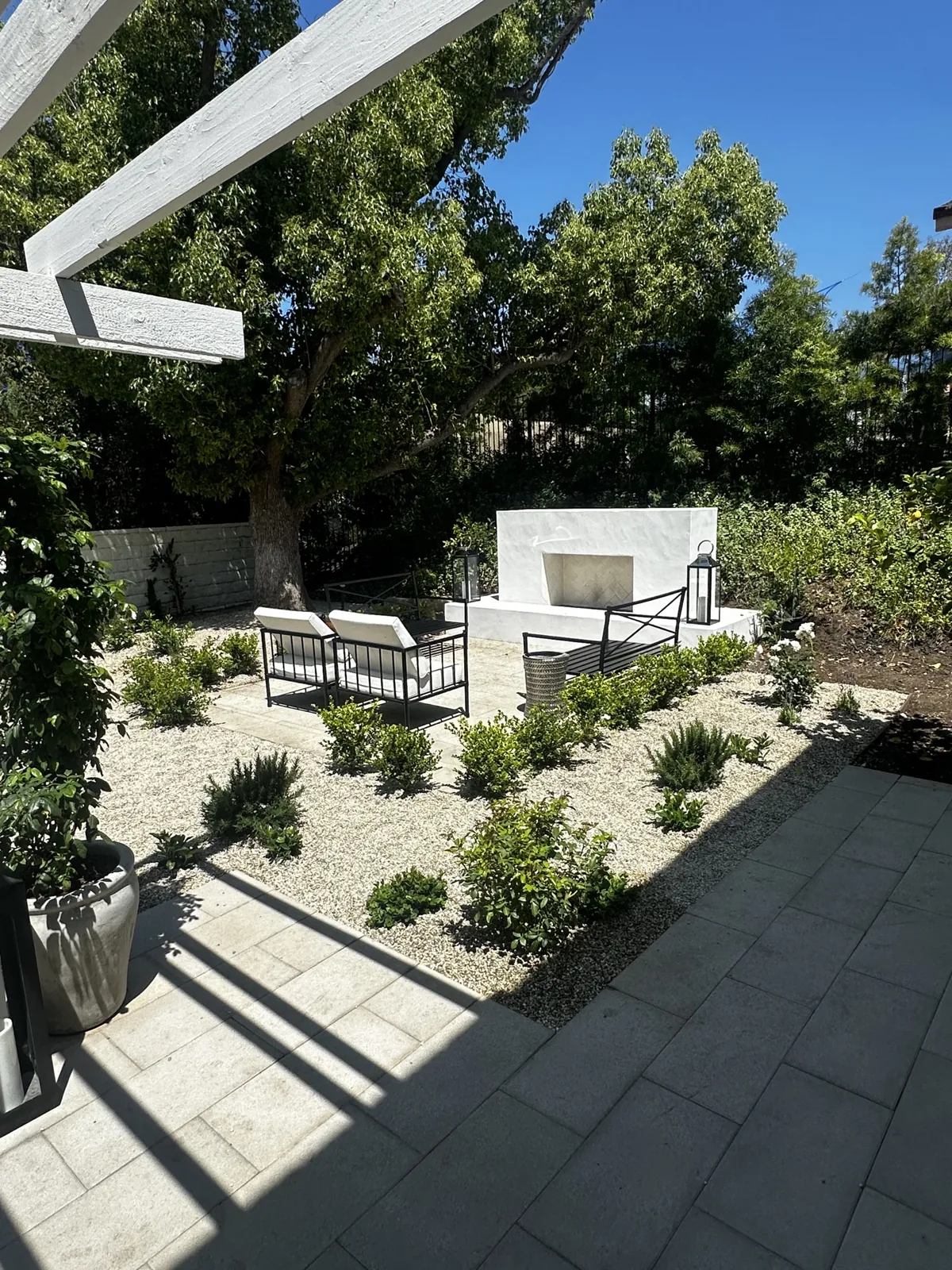
A gas fire pit or fireplace runs on either natural gas from the house or a propane tank. We usually recommend natural gas for a built-in feature, because you never run out and there's no tank to hide or refill. Propane makes sense when a gas line to that spot isn't practical, or for a smaller fire table.
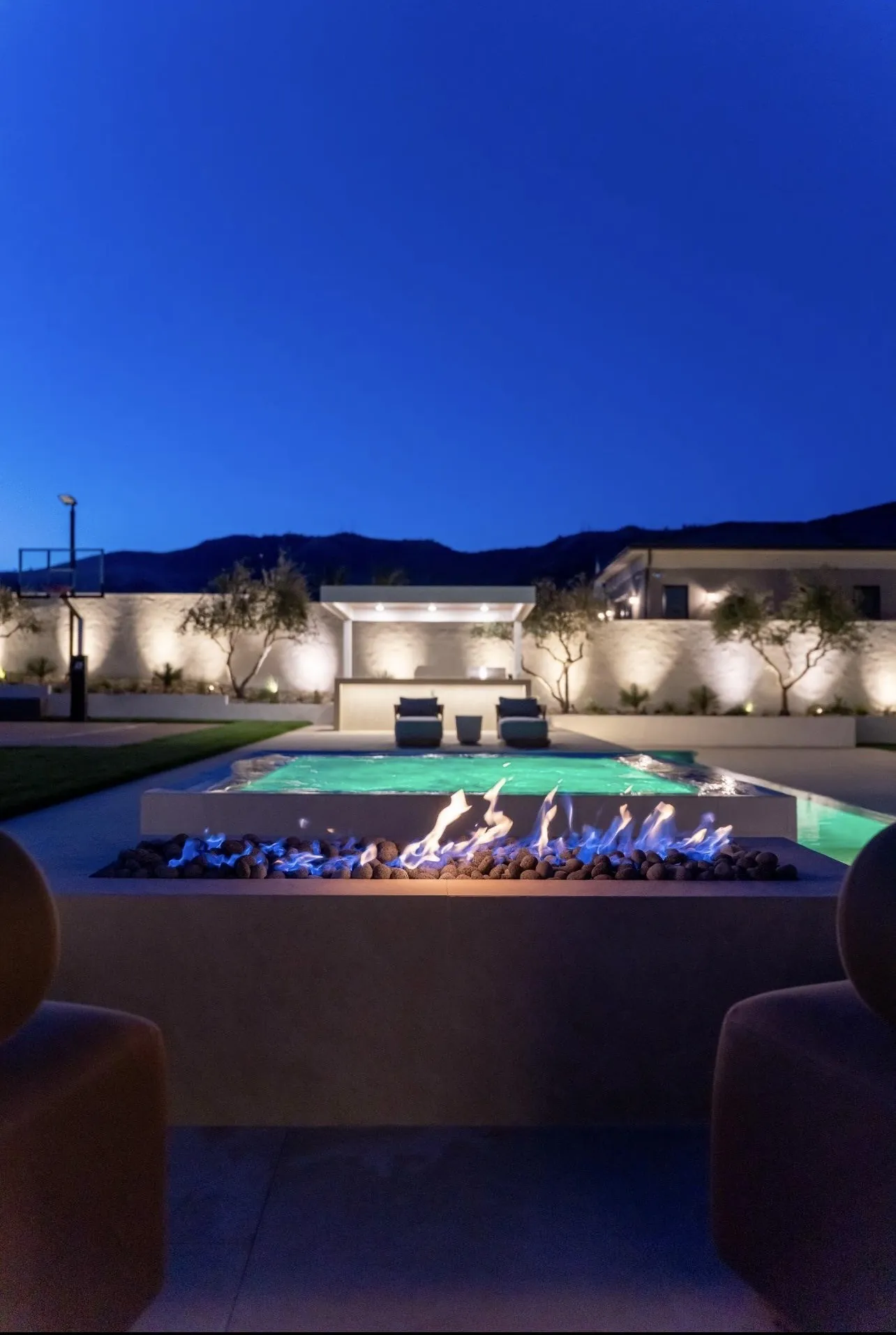
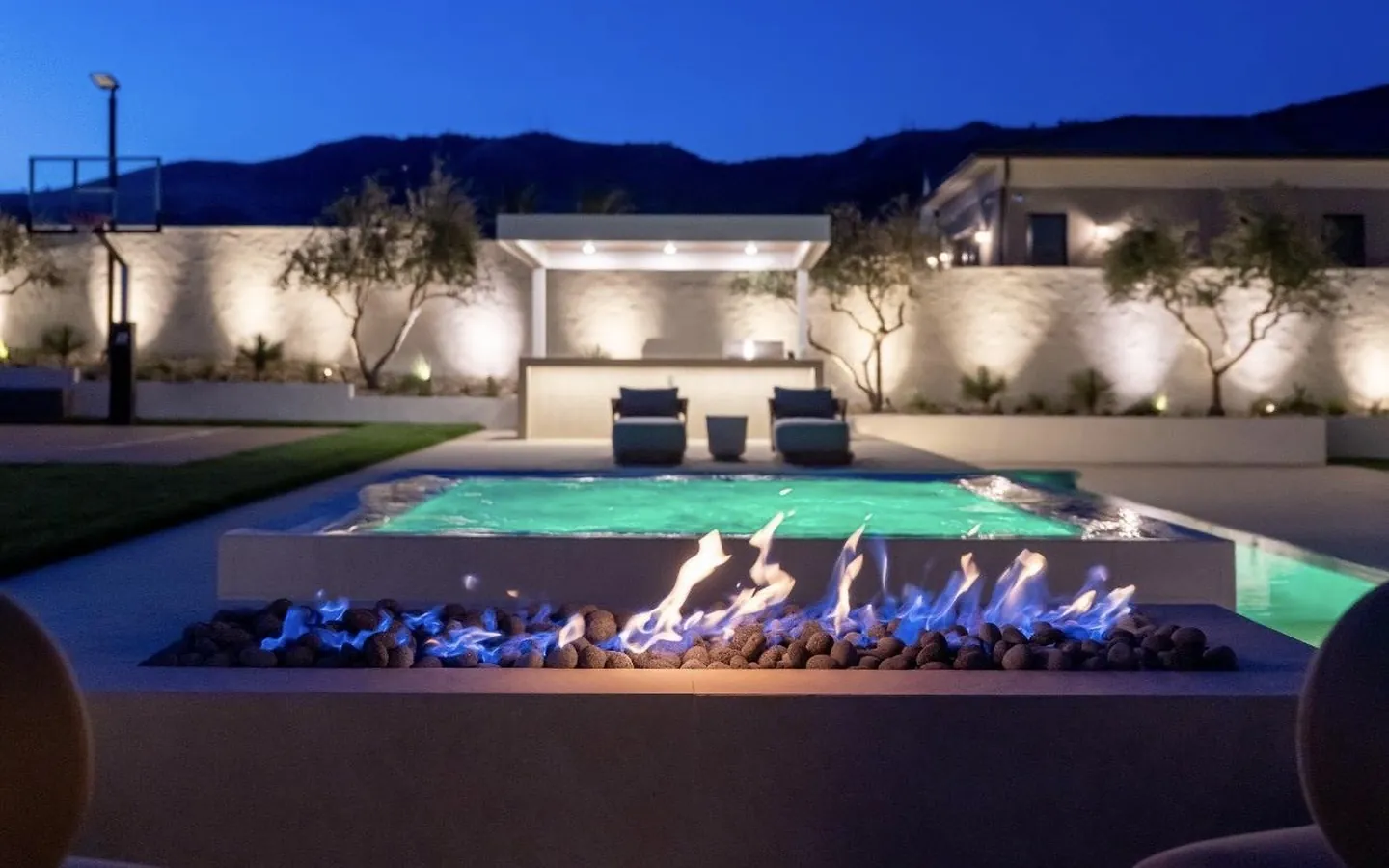
Gas gives you a lot of design freedom. Linear burners, fire tables built into a bench, fire bowls on a pool deck, a fireplace with a clean modern opening. You choose what the flame sits in, like fire glass or lava rock, and you can add a remote, a wall switch or an app control.
The tradeoff is the feel. A gas flame looks good and puts out some warmth, but it doesn't throw heat or smell like a wood fire, and you can't roast much over it. If the fire is mostly for looks and mood, nobody minds.
- On and off in seconds, no smoke and no ash
- Can be used on no-burn days
- Safe close to the house, a patio cover or the pool, with the right clearances
- Less real heat and no wood-fire smell
Wood: the real thing, with real upkeep
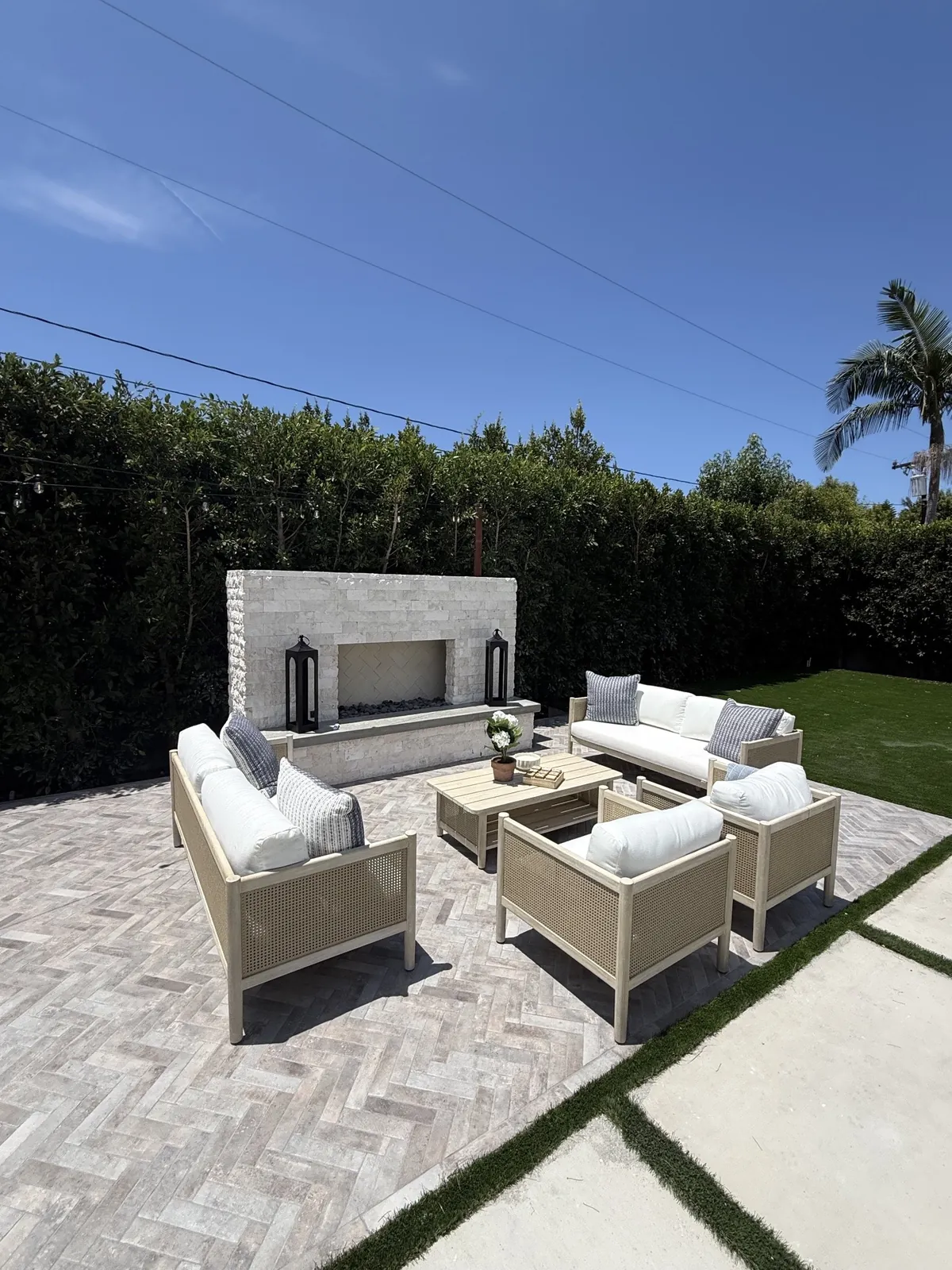
Nothing beats a wood fire for atmosphere. It crackles, it smells like camping, and a good bed of coals keeps a circle of people warm on a cold night. If you want to cook over the fire, from s'mores to a grill grate, wood is the way to go.
It does ask more of you. Someone has to build the fire, feed it and let it burn down before bed. Ash needs to be cleaned out. Smoke moves with the wind, so it can end up in your eyes, in the house, or in a neighbor's open window. It also needs more room, away from overhangs, patio covers, trees and anything that can catch an ember.
- Real crackle, smell and heat
- Good for cooking over the fire
- Smoke, ash and wood storage to deal with
- Needs more clearance and can't be used on no-burn days
No-burn days in Southern California
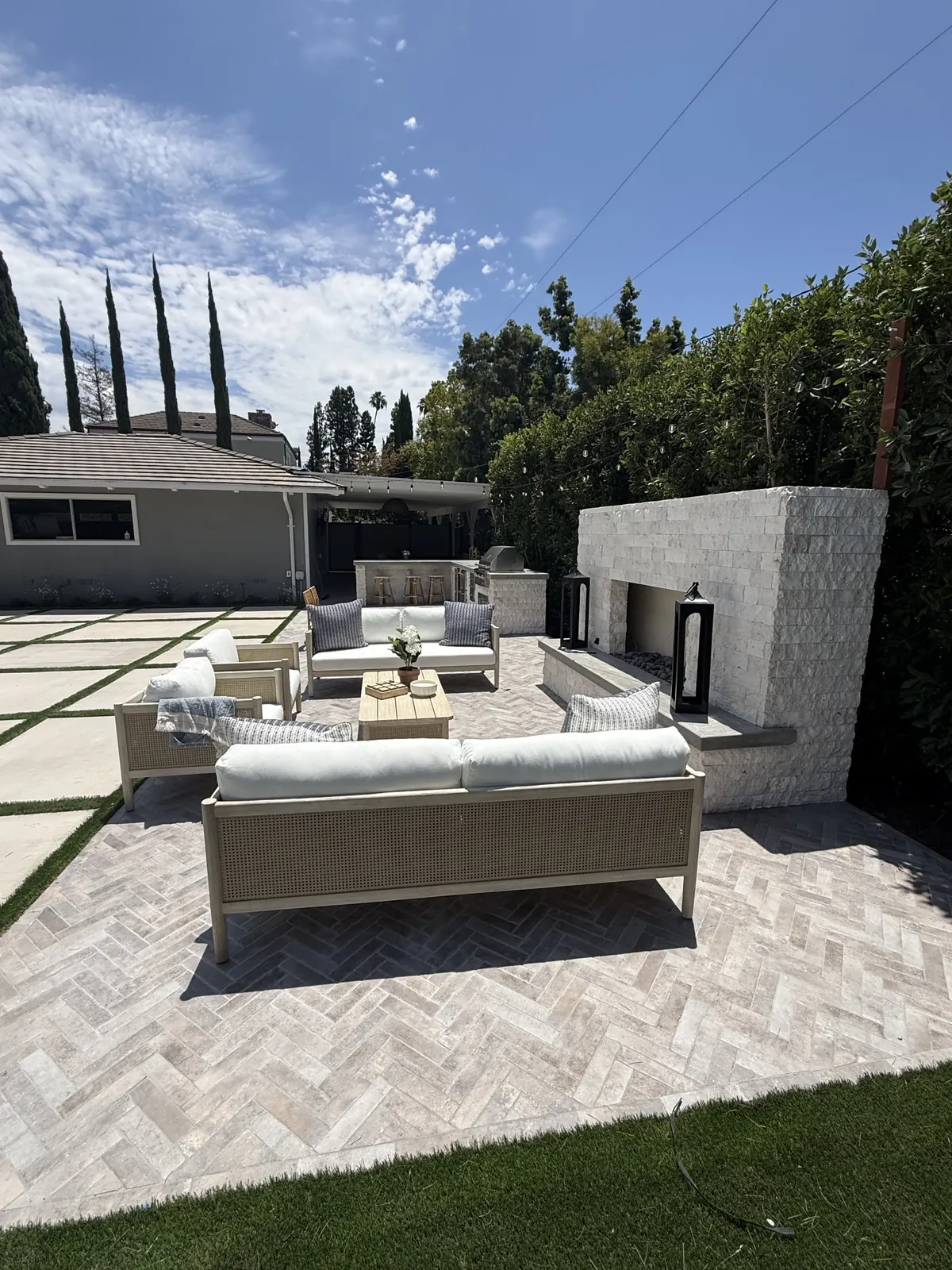
Most people don't know about this part. Most of Los Angeles, Orange County, Riverside and San Bernardino counties fall under the South Coast Air Quality Management District, which runs a program called Check Before You Burn. From November 1 through the end of February, the district can call a No-Burn Alert on days the air is expected to be bad.
On those days, burning wood is not allowed, and that includes outdoor fire pits and fireplaces, not just the one in your living room. Gas fireplaces and fire pits are not covered, so you can still use them. You can check alerts on the district's website by ZIP code, by email or through their hotline.
Winter is when most people want a fire, so if you'd hate finding out on a cold Friday night that you can't light the wood pit, that's a strong reason to go gas.
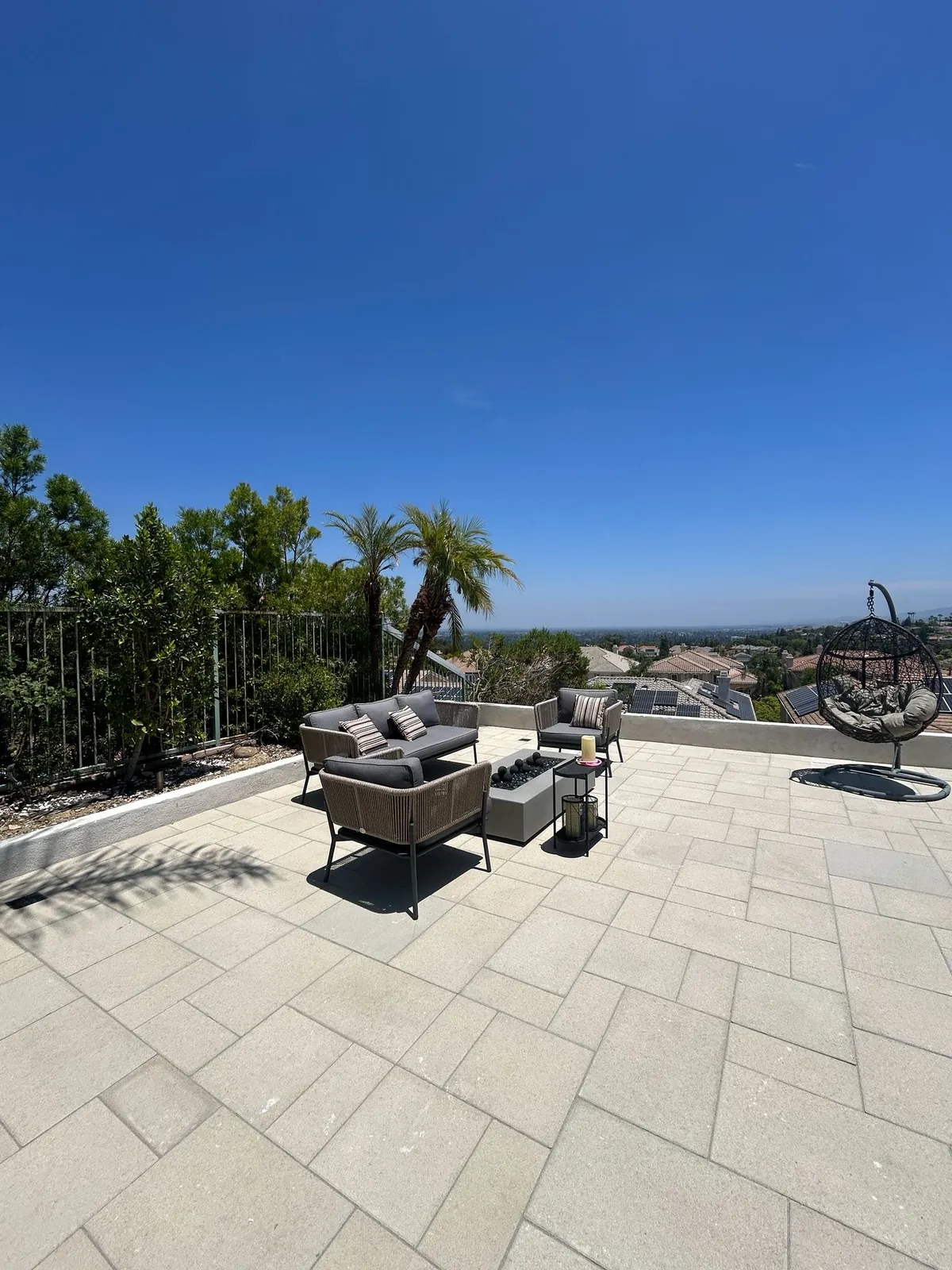
How to choose for your yard
We usually ask a few questions on the site walk. How often will you use it, and is it for everyday evenings or for occasional parties? How close is it to the house, the patio cover and the property line? Do you want to cook over it? And is there a gas line nearby, or would we need to run a new one?
If the answer is "most nights, close to the house, mostly for the look," gas wins almost every time. If it's a fire pit in the back corner of a larger yard, for weekend nights with friends and the kids roasting marshmallows, wood can be a great fit.
You also don't have to pick one forever. Some homeowners build a masonry fire pit sized for wood and add a gas line and a burner with a log set, so they get easy everyday use with the option to switch. It takes some planning up front and a burner kit rated for the job, but it's a good middle ground.
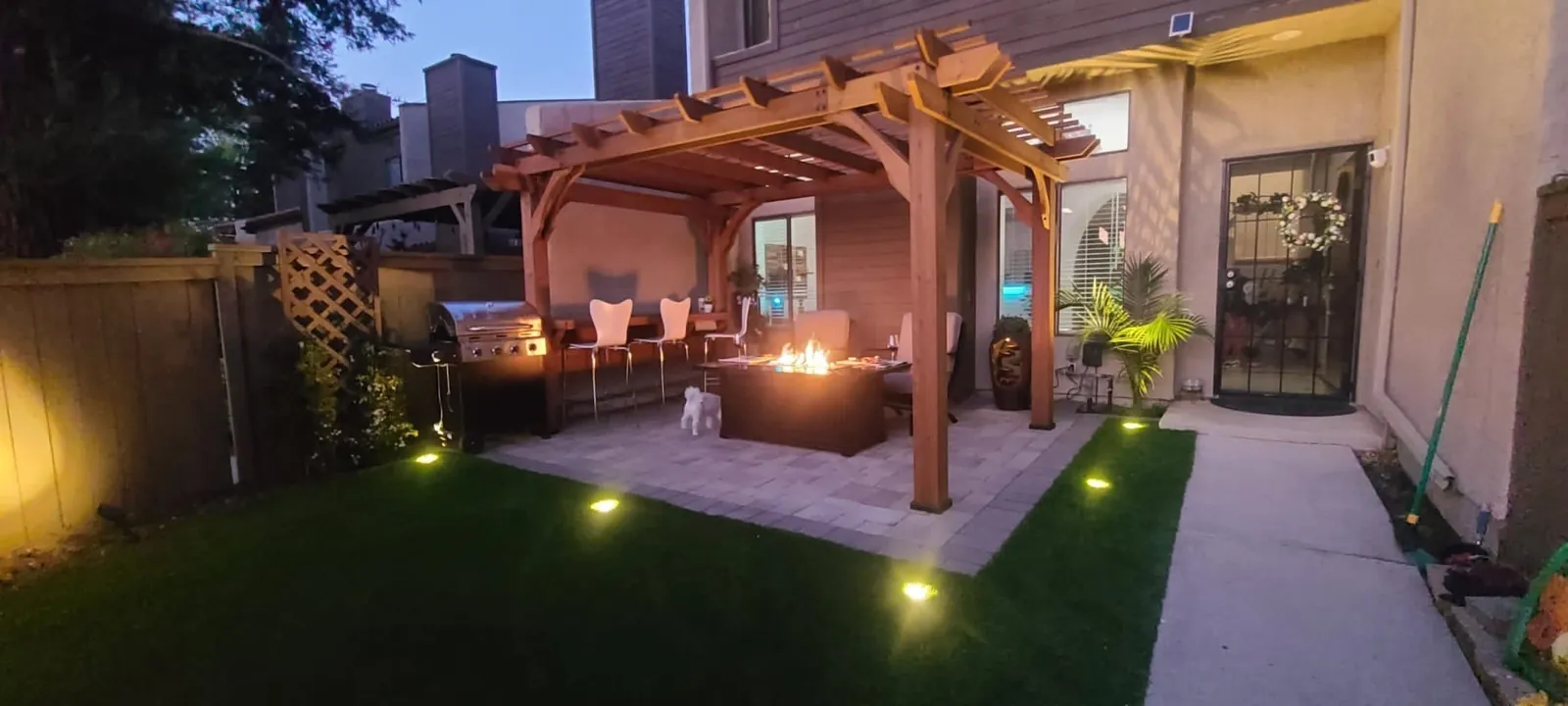
What to plan before you build
A few things make a big difference no matter which fuel you pick:
- Placement: think about wind direction, where people will sit, and sightlines from inside the house
- Clearances: follow the manufacturer's specs for gas burners and keep wood fires well away from covers, eaves and trees
- Seating: plan the bench or chair layout at the same time as the fire, so the circle feels right
- Gas and permits: a new gas line usually needs a permit and an inspection, and we handle that as part of the job
- Local rules: some cities and HOAs restrict wood burning or have extra rules in high fire hazard areas, so we check before we design
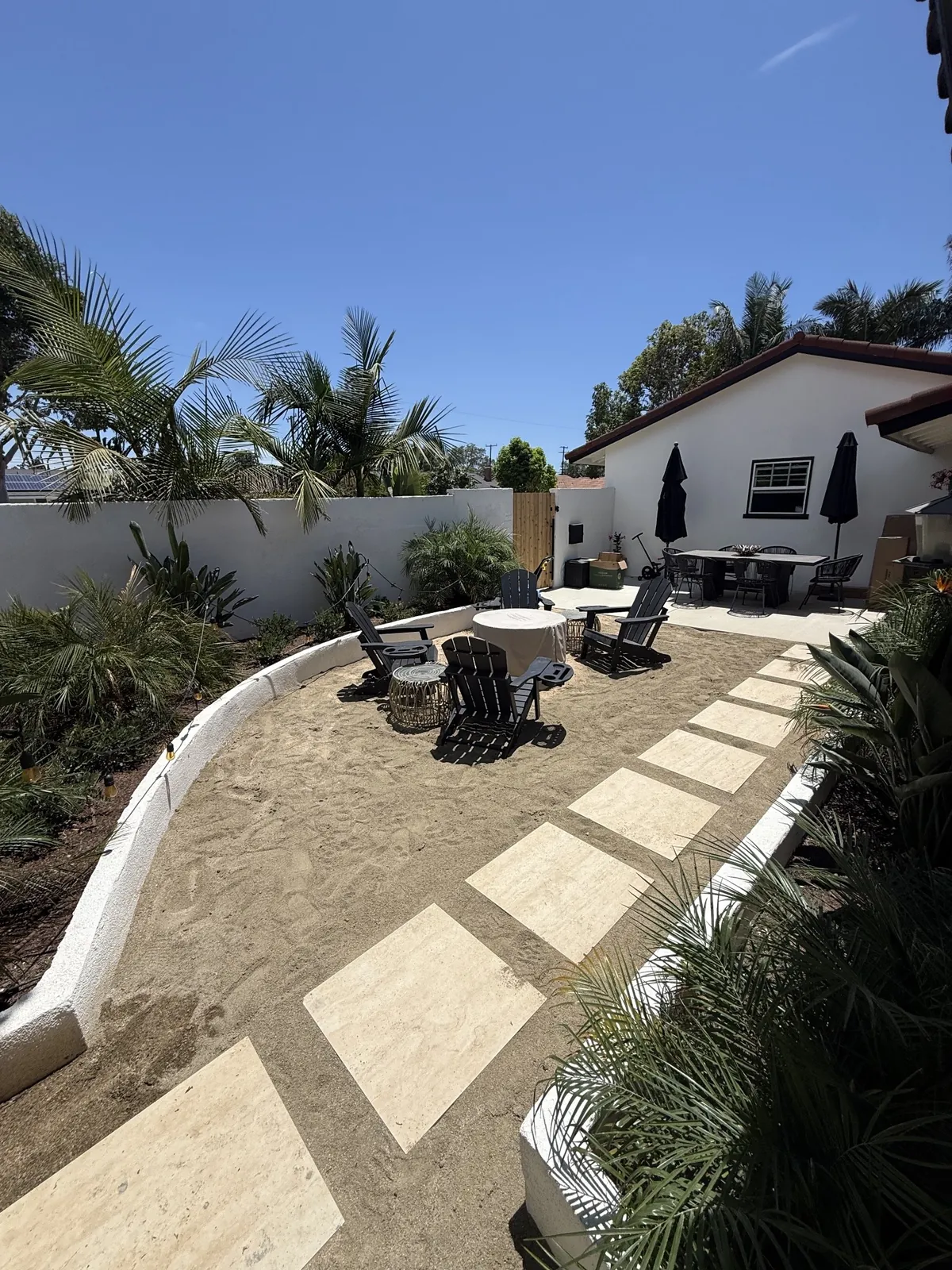
A tip from the field
Before you lock in the spot, stand there on a breezy evening. Wind ruins more fire pits than anything else. With wood, it pushes smoke right into the seating area. With gas, a strong breeze can make the flame dance or even blow out a small burner. Moving the fire a few feet, adding a low wall on the windy side or using a glass wind guard on a gas pit usually fixes it, and it's much easier to plan for now than to fix later.
Questions we get
Is a gas or wood fire pit better?
For most Southern California homes, gas is easier to live with: no smoke or ash, quick on and off, and usable on no-burn days. Wood is better if you want real heat, crackle and cooking over the fire, with room to keep smoke away from the house.
Can I use my outdoor wood fire pit on a no-burn day?
No. In the South Coast AQMD area, No-Burn Alerts from November 1 through the end of February apply to outdoor wood fire pits and fireplaces too. Gas fire pits and fireplaces are not covered.
Does a gas fire pit actually keep you warm?
Some, enough to take the edge off a cool evening if you sit close. It won't throw heat like a big wood fire, so for colder nights some people add a patio heater.
Can you convert a wood fire pit to gas?
Often, yes. If the pit is solid and there's a way to bring in a gas line, we can install a burner and log set or fire glass. It works best when the pit was planned with that in mind from the start.
Do I need a permit for a gas fire pit?
A new gas line usually needs a permit and an inspection. We handle both as part of the project.