By New Vision Builders team · Published · 6 min read
What that white line actually is
Every pool loses water to evaporation, and in a hot, dry LA or Orange County summer it loses a lot. The water leaves, but the calcium and other minerals dissolved in it don't. They get left behind right where the water meets the tile, and over time they stack up into a crusty white band.
Then the pool gets topped off with more tap water, which brings in more minerals. Most water across Southern California is hard to begin with, so pools here build scale faster than pools in a lot of other places. Spas, spillways and water features make it worse, because they splash water onto tile where it dries over and over.
Two kinds of scale, and why it matters
Not all calcium scale is the same, and the type decides how hard it is to get off.
Calcium carbonate is the common one. It's white, chalky and fairly soft, and it fizzes if you put a drop of acid on it. It's usually newer buildup, and it comes off without too much fight.
Calcium silicate is the tough one. It tends to be grayer, harder and almost glassy, and acid barely touches it. It usually means scale has been building for years, often after long stretches of high pH. This is the kind people scrub for hours with no luck.
- Carbonate: white, chalky, softer, fizzes with acid, easier to remove
- Silicate: gray-white, hard, glassy, doesn't react much to acid, often needs blasting
What you can try yourself
For light carbonate scale, start gentle. Lower the water a few inches below the scale line if you can, so you're working on dry tile. A pool scale remover made for tile, a nylon brush or scrub pad, and some patience will take care of a lot of it.
Be careful with tools. A pumice stone works on some ceramic and porcelain tile, but it will scratch glass tile and glossy finishes, and those scratches don't come out. Never use a metal scraper or a wire brush on tile. If you're not sure what kind of tile you have, test any tool in a small hidden corner first.
If you use acid products, follow the label, wear gloves and eye protection, and keep them off the plaster and off your coping and deck. Rinse well when you're done.
When it's time for bead blasting
Thick scale, silicate scale, or a long waterline that would take days by hand usually calls for a pro. The most common method is bead blasting: a crew lowers the water and blasts the tile line with a fine, soft media, like glass bead or a baking soda based media, at pressures set for the tile. The scale breaks off and the grout and tile underneath stay intact.
Done right, it takes a few hours instead of a few weekends, and the tile looks close to new. Done wrong, with the wrong media or too much pressure, it can etch the tile or wash out grout. Ask what media and pressure they plan to use, especially if you have glass tile.
Clean it or replace it?
Sometimes the scale isn't really the problem. If tiles are cracked, loose or popping off, grout is missing, or the tile is faded and dated, cleaning just makes old tile look like clean old tile.
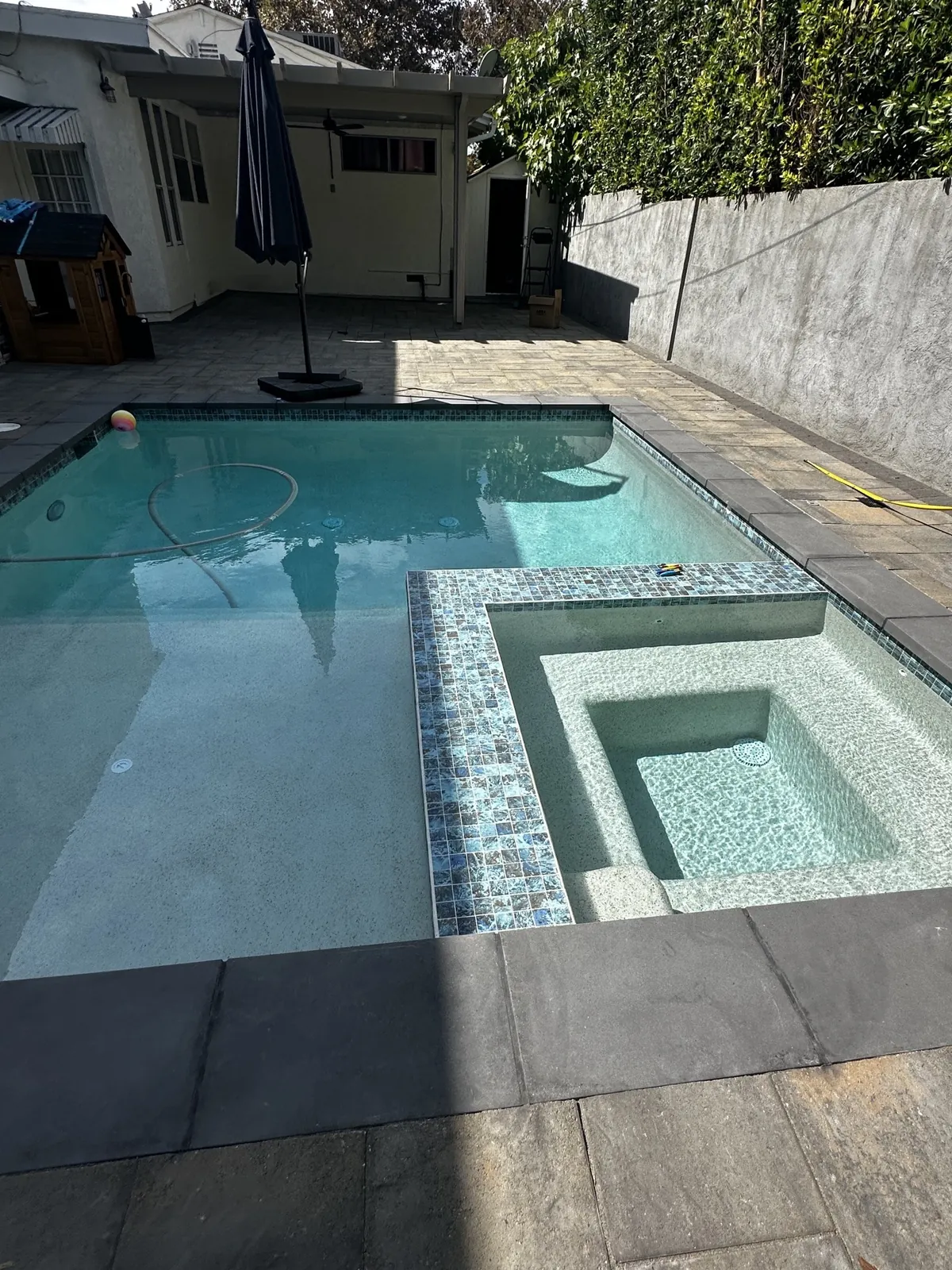
That's often the moment to think about new waterline tile, especially if the plaster is near the end of its life too. A replaster is the easiest time to change tile, because the pool is already drained and the crew is already there. We go over both options on a site visit so you can decide what's worth it.
How to keep it from coming back
Scale is a chemistry problem first. When the water has too much calcium, too high a pH or too much alkalinity, it wants to drop minerals out, and the tile line is where it happens. Keeping the water balanced is the single biggest thing you can do.
- Keep pH in the normal range and don't let it drift high
- Test calcium hardness and total alkalinity regularly, not just chlorine
- Brush the tile line every week so new scale never gets a head start
- Use a scale or sequestering product if your water is very hard
- Cover the pool or spa when you can to cut down evaporation
- Partly drain and refill when calcium gets very high, with your pool pro's advice
A tip from the field
Before you buy anything, put a few drops of a mild acid, like white vinegar, on the scale. If it fizzes, it's mostly carbonate and you can probably handle it yourself. If nothing happens, it's likely silicate, and you'll save yourself a lot of scrubbing by calling for blasting instead.
Questions we get
Why does my pool get white buildup on the tile?
Water evaporates and leaves calcium behind at the waterline. Hard tap water, high pH and splashing water features all make it build up faster.
Will vinegar remove calcium from pool tile?
It can soften light calcium carbonate scale, and it's a handy way to test what kind of scale you have. It won't do much on hard calcium silicate scale.
Can I use a pumice stone on glass pool tile?
No. Pumice scratches glass tile and glossy finishes. Use a nylon brush and a tile-safe scale remover, or have it professionally bead blasted.
How often should pool tile be cleaned?
Brush the tile line weekly as part of normal upkeep. In very hard water areas, many pools need a deeper scale cleaning every year or two.
Does bead blasting damage pool tile?
Not when it's done with the right media and pressure for your tile. Ask the crew what they'll use, especially for glass tile.