By New Vision Builders team · Published · 5 min read
The short version
Every pool interior is a cement-based coat over the shell. What changes is what's mixed into it. Plaster is white cement and fine marble sand, troweled smooth. Pebble finishes mix small, rounded stones into the cement, and after it's troweled the top layer is washed off so the stones show through.
That one difference drives almost everything else: how it feels under your feet, how long it lasts, how it handles chemistry and what color the water looks. Neither one is the wrong answer. They're built for different priorities.
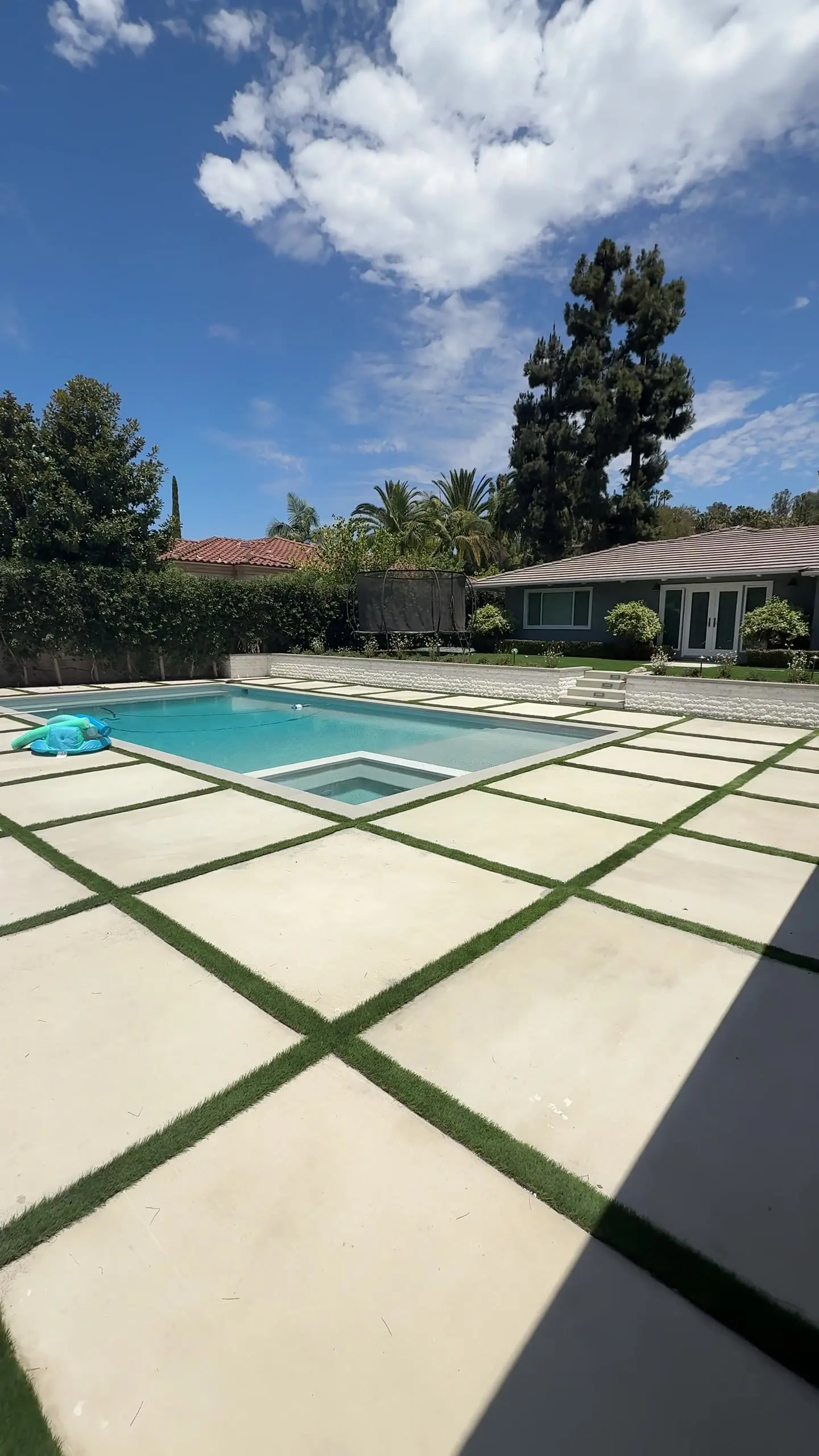
Plaster: smooth, bright and classic
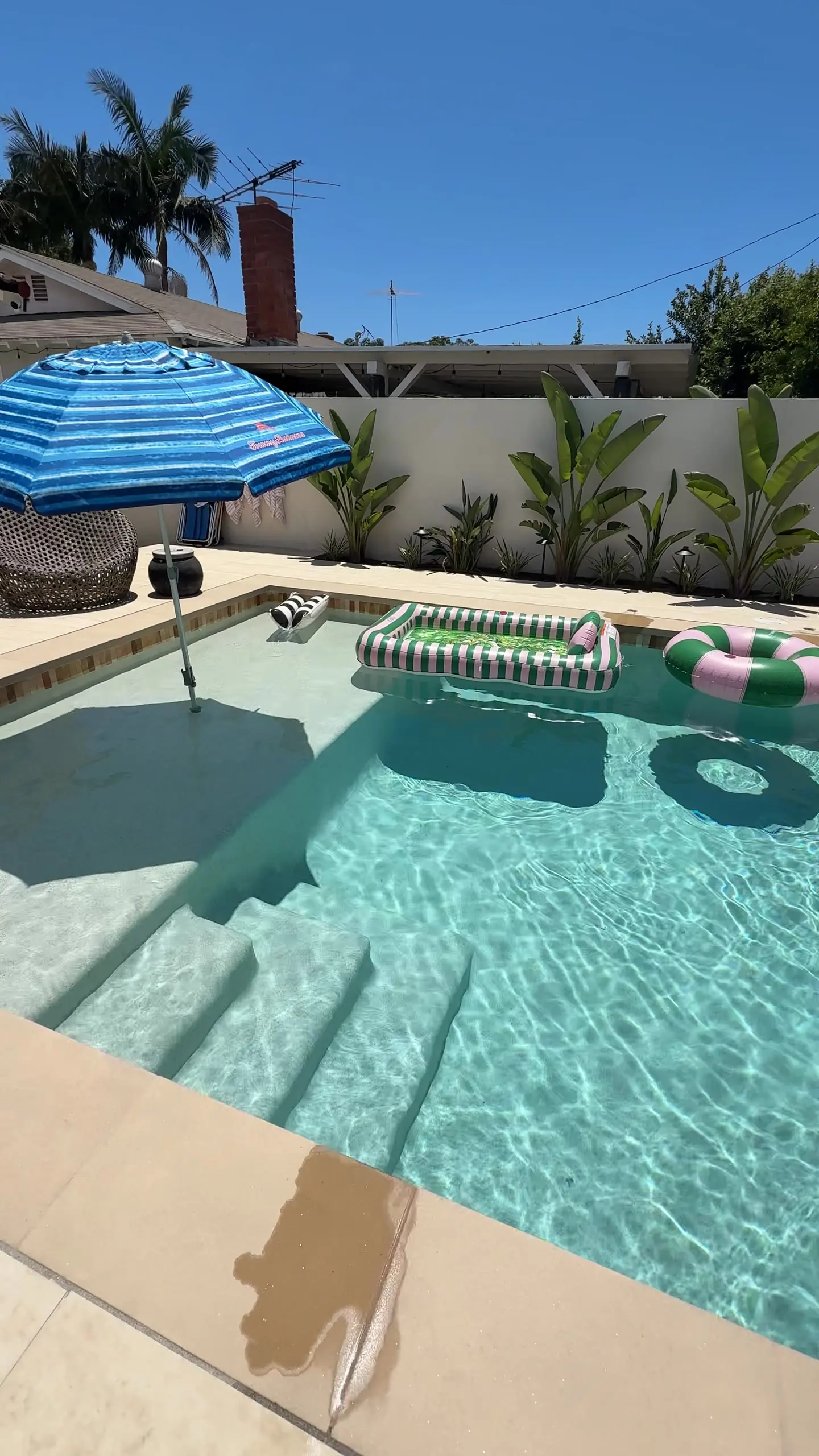
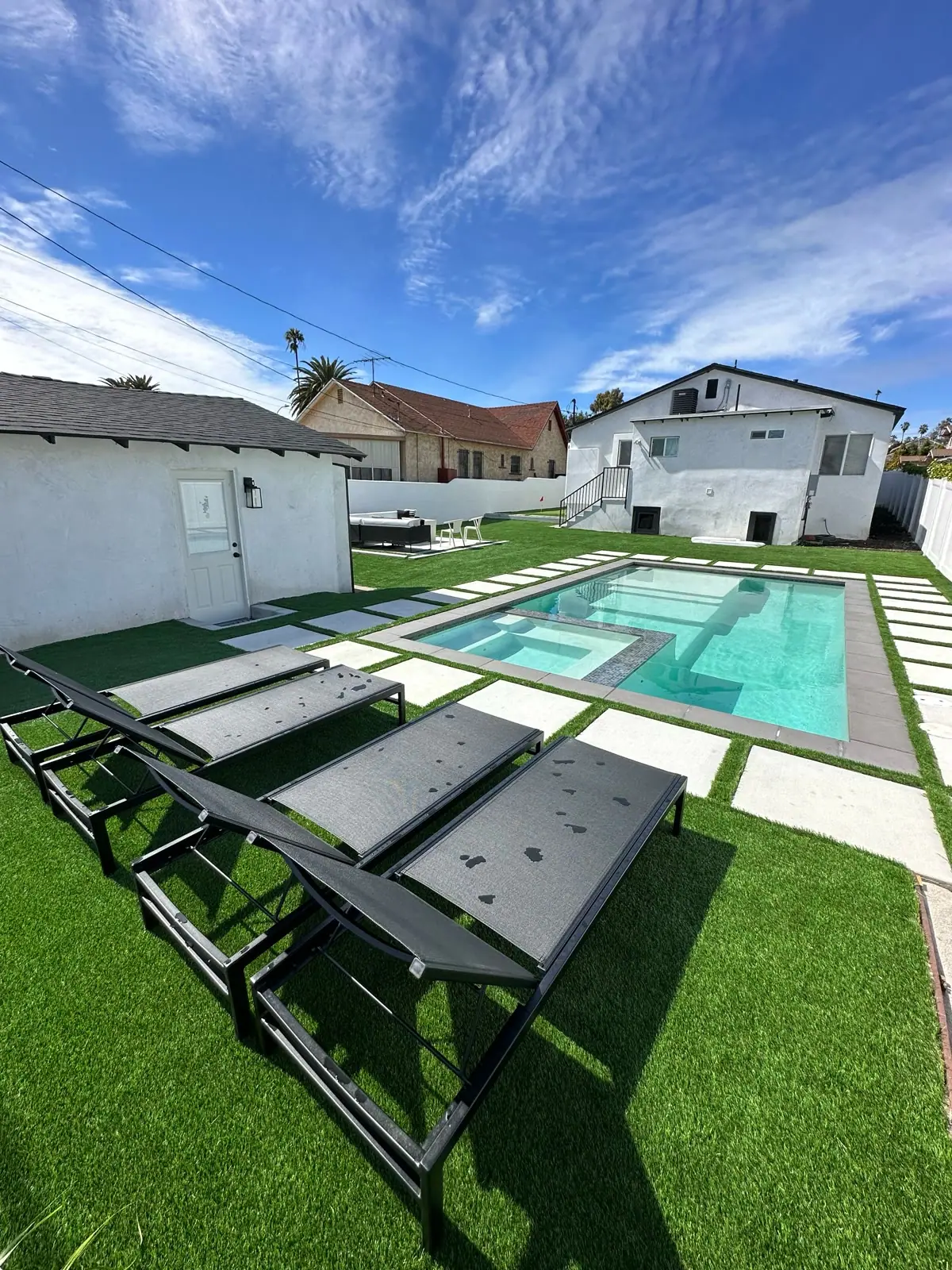
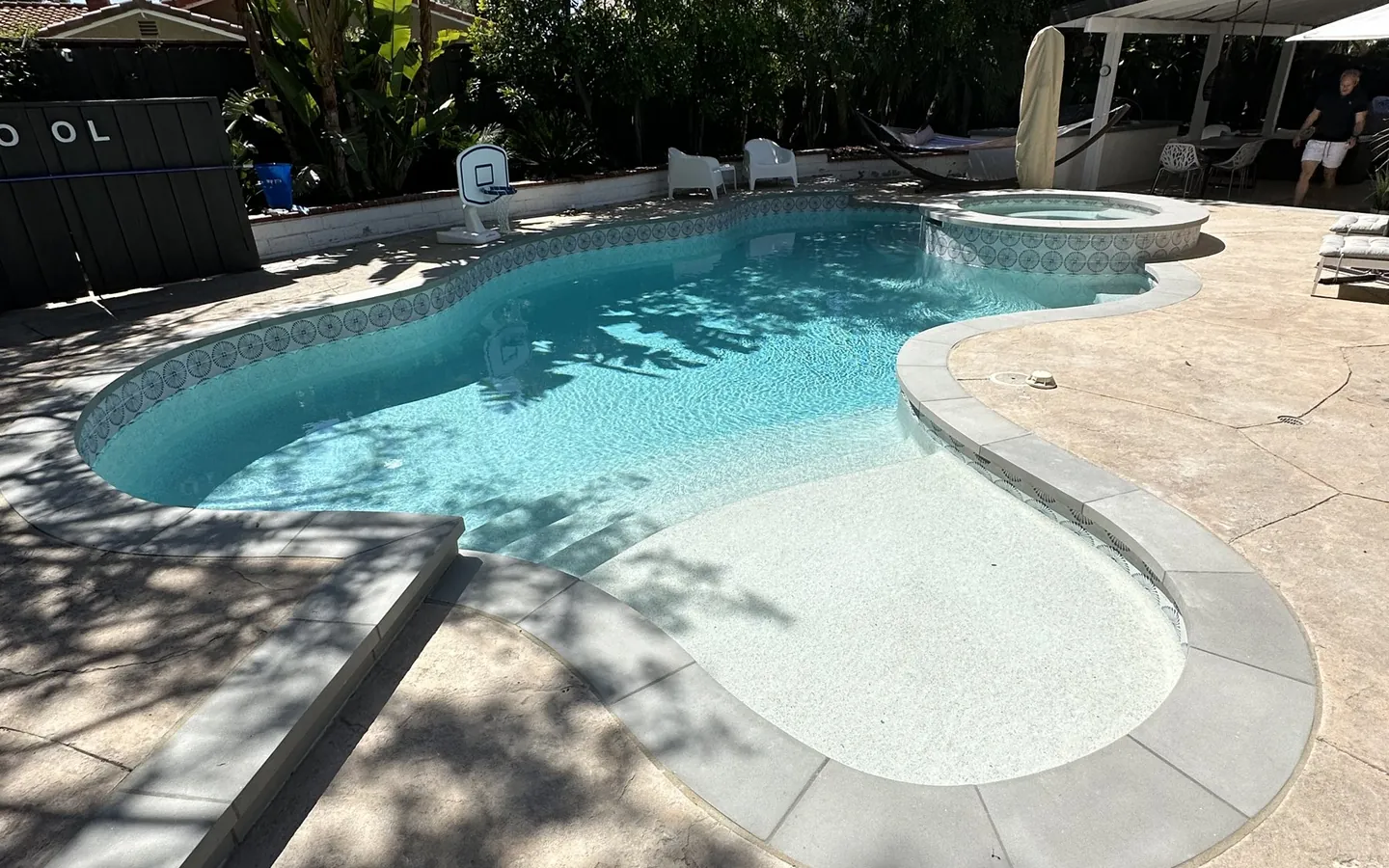
Plaster is what most older pools in Los Angeles and Orange County have. It goes on smooth, it's soft on hands and feet, and in white it gives you that bright, clean blue water people picture when they think of a pool. Colored plasters shift the water toward gray, teal or deep blue.
The tradeoff is wear. Plaster is softer, so over time it etches, stains and gets rough in spots, especially on steps and benches where people sit and walk. Hard water and chemistry that drifts out of balance speed that up. When it gets there, the pool needs to be drained, chipped and replastered.
Plaster makes sense when you want the classic look, when kids spend hours in the pool and you want the softest feel, or when you're getting a house ready to sell and want a fresh, clean pool without the bigger spend.
- Smoothest feel on hands and feet
- Bright, classic water color in white
- Lower up-front cost than pebble
- Shows stains and etching sooner, needs redoing sooner
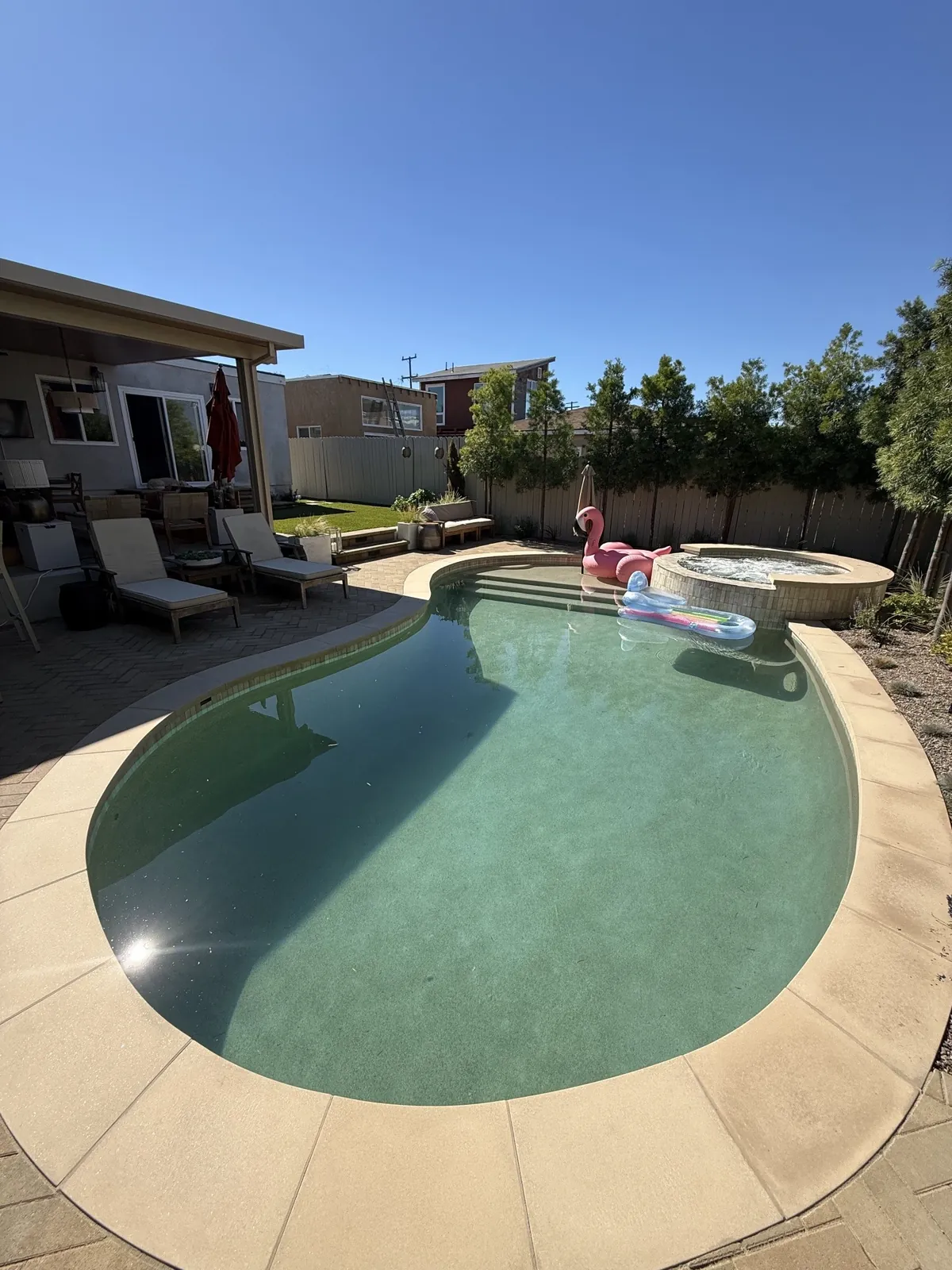
Pebble: tough, textured and low-drama
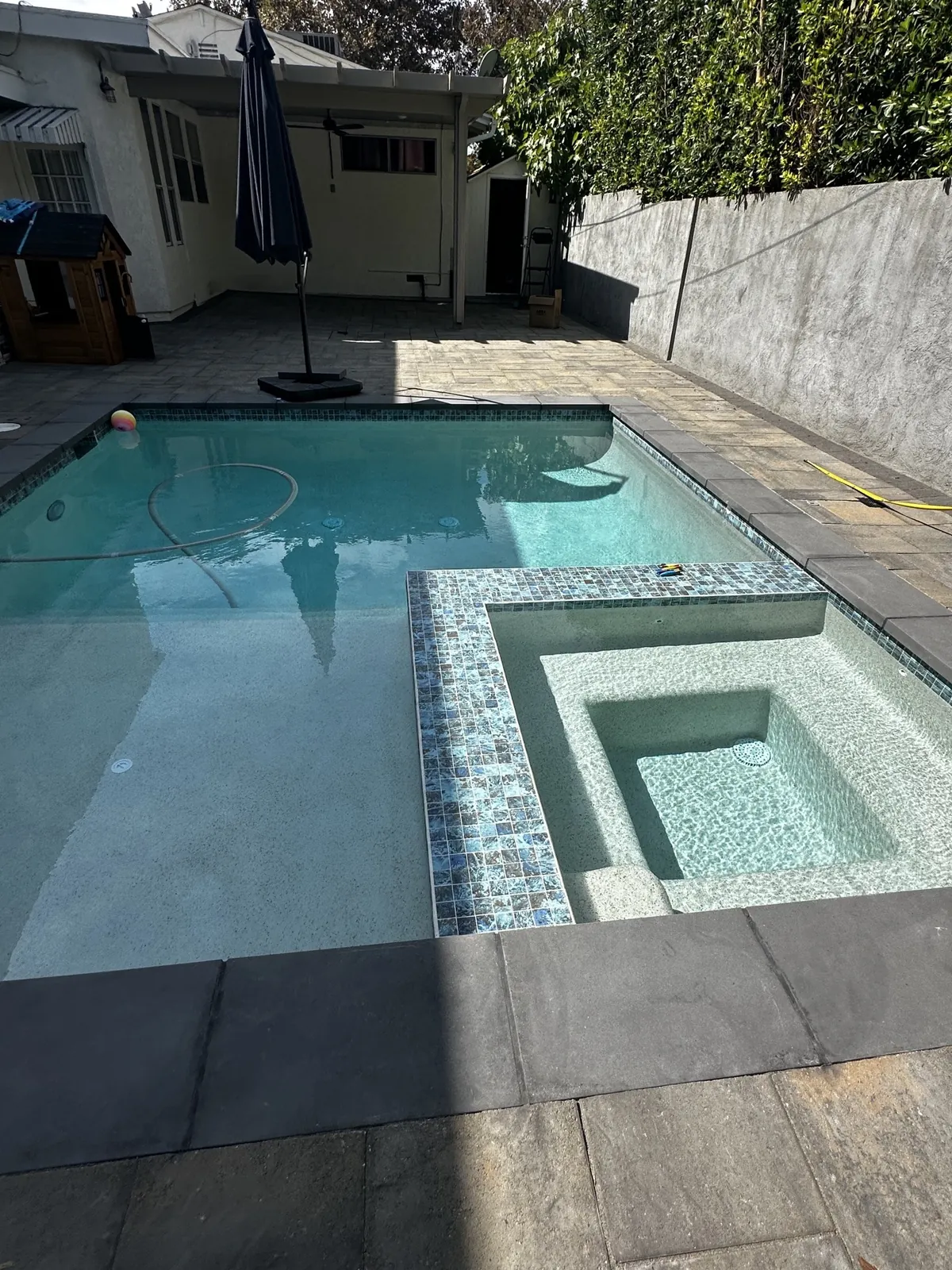
Pebble finishes are the strong one. The stones carry most of the wear, so the surface holds up to sun, hard water and chemistry swings much better than plaster. Small stains and color changes blend into the texture instead of standing out on a flat white wall.
You get more color choices too. Pebble blends come in mixes of tan, gray, blue and black stones, and they give the water a deeper, more natural look than plaster does. Smaller pebble sizes feel smoother underfoot; larger ones feel more like a stone beach.
The tradeoff is feel and up-front cost. Pebble is rougher than plaster, especially the first few months, and some people notice it on their feet if they swim a lot. It also costs more to install. In return, it usually goes a lot longer before the pool needs another resurfacing.
- Lasts longer and hides stains better
- Handles hard water and sun well
- Wide range of natural colors
- Textured feel, higher up-front cost
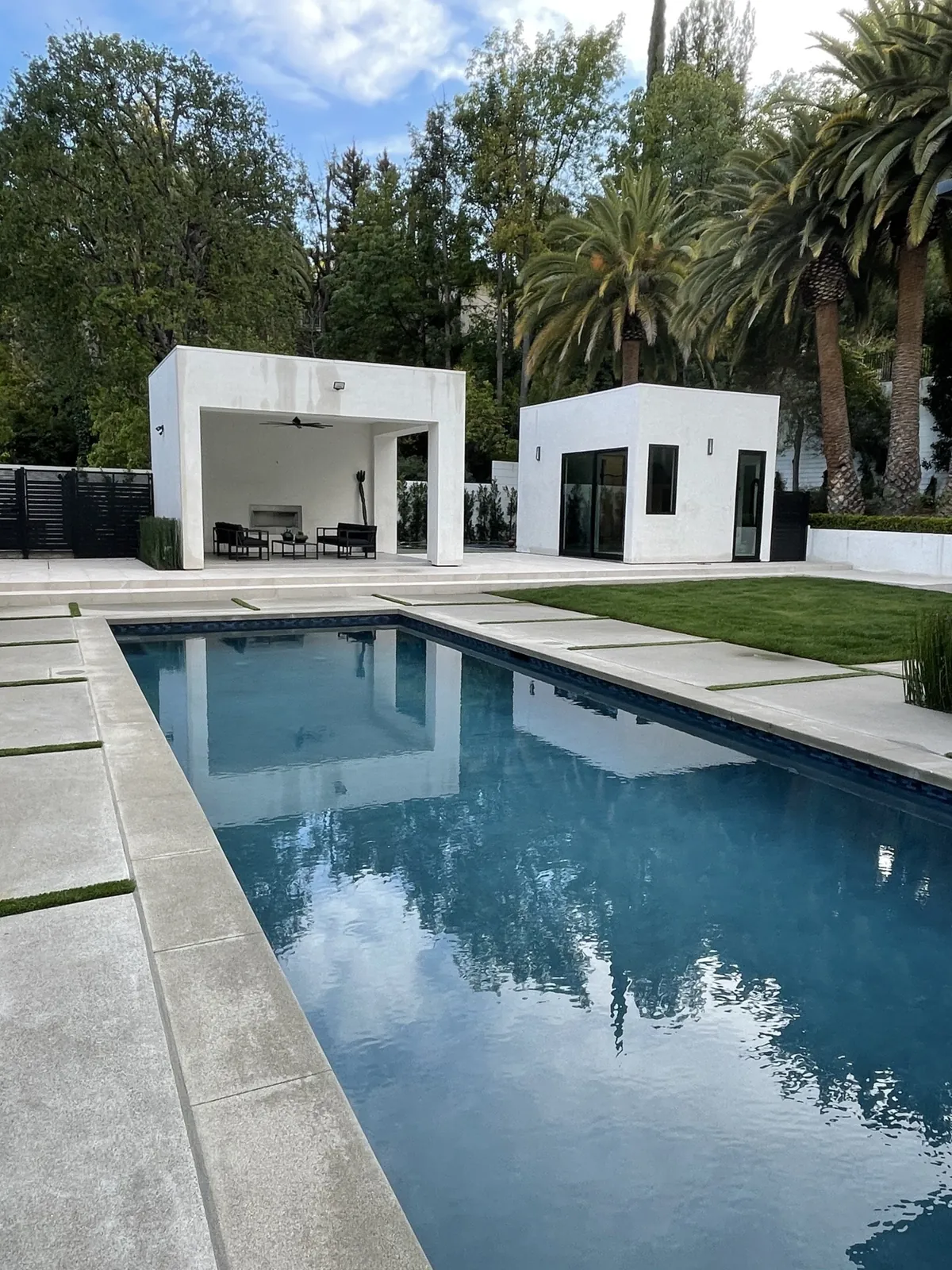
How to choose for your pool
We usually start with three questions. How long are you staying in the house? Who uses the pool most? And how much do you want to think about it once it's done?
If you're staying for the long run and want something you can mostly forget about, pebble tends to win, because one resurfacing lasts you longer. If the pool is mainly for little kids or long laps and comfort matters most, plaster or a fine pebble is the better feel. If you're selling soon, fresh white plaster makes a tired pool look new for less.
Color matters as much as the material. Light finishes give you bright, tropical water; dark finishes give you deep blue or lagoon tones and hold a little more heat from the sun. We bring real samples to the site visit and look at them in your yard's light, because a chip in a showroom never looks the same as it does under a Southern California sky.
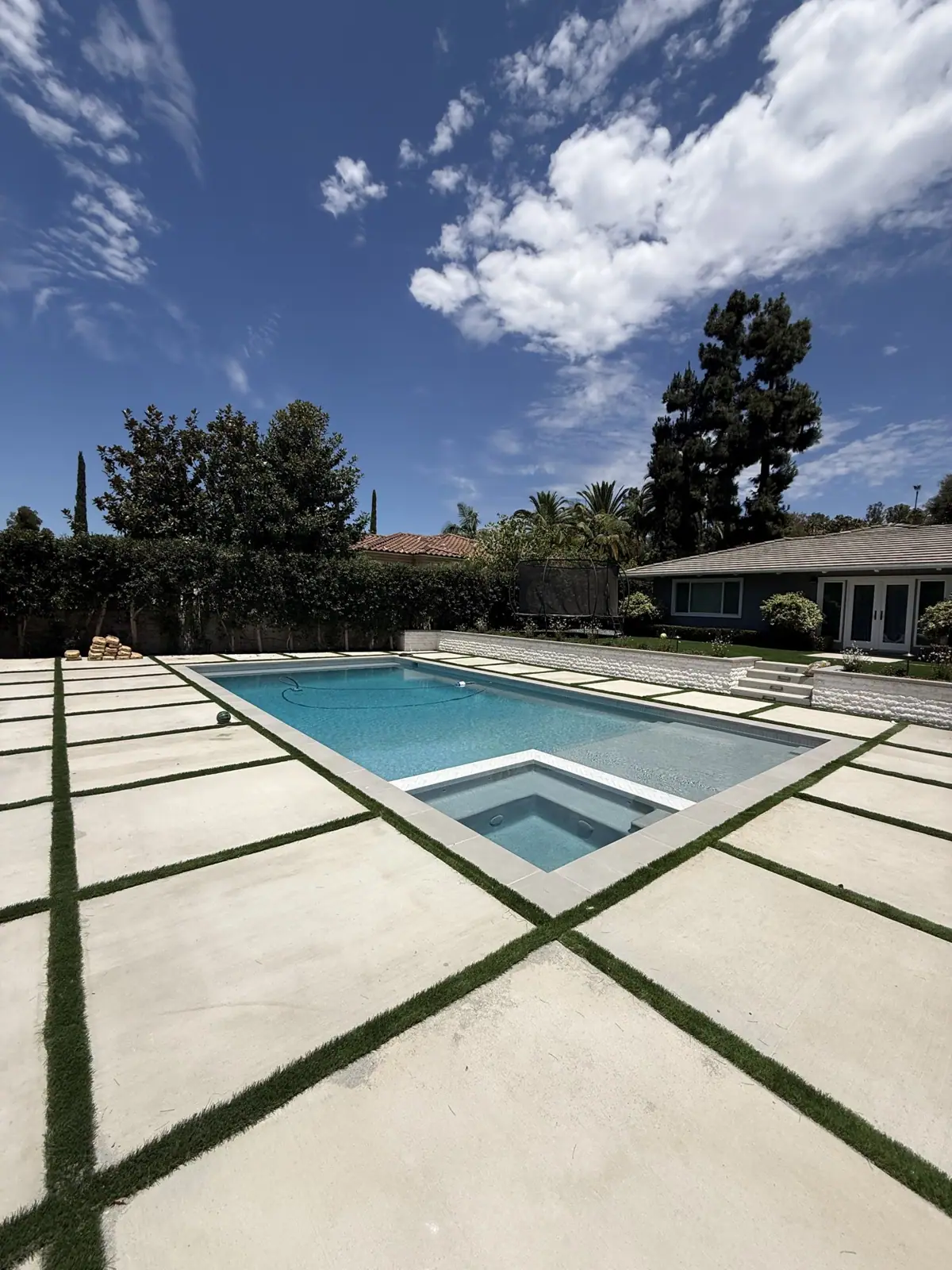
What the job looks like
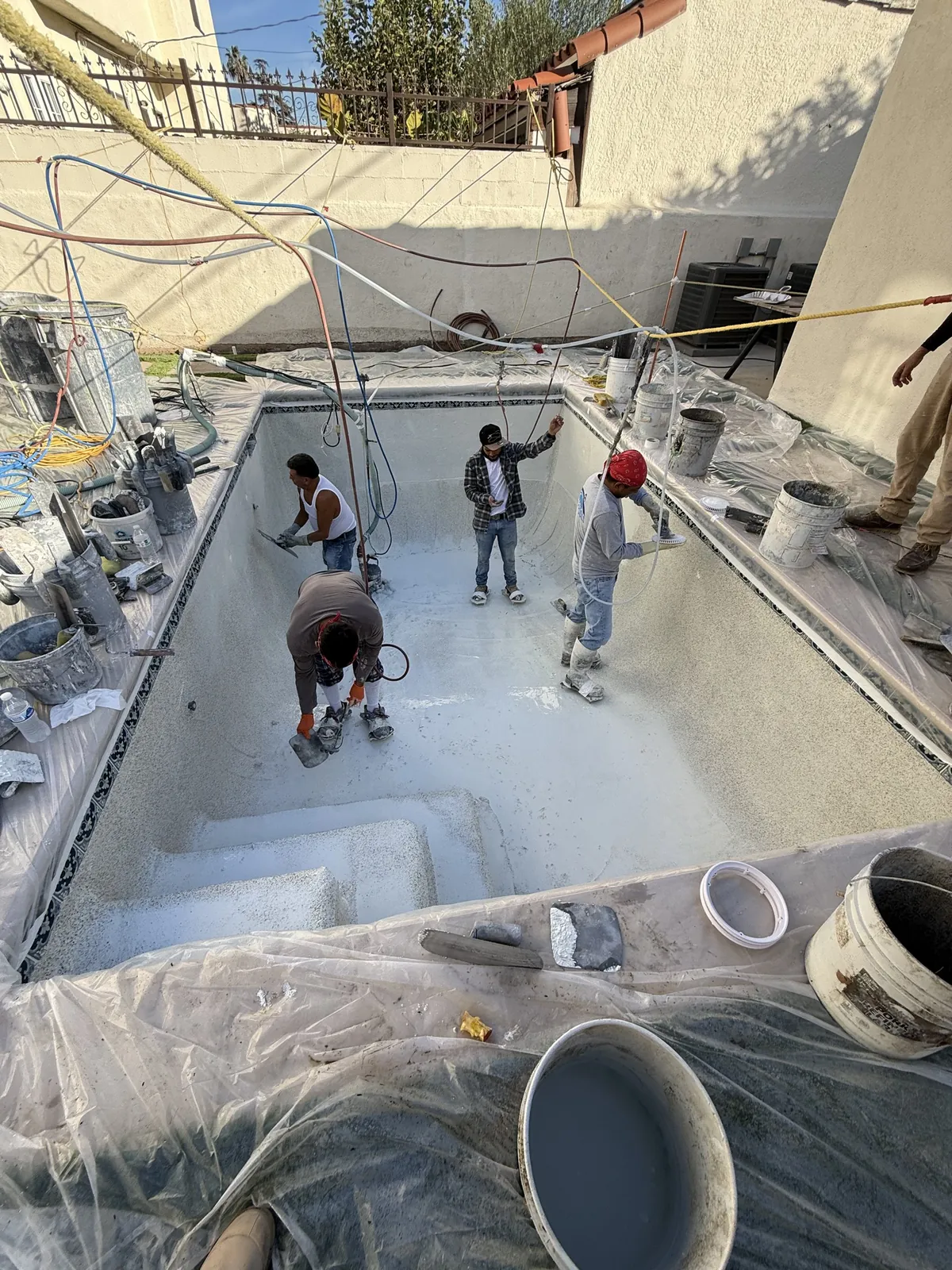
The process is the same for both. We drain the pool, chip out the old finish down to a sound surface, fix any cracks or hollow spots, and replace waterline tile and coping if they're part of the job. Then the crew applies the new finish in one day, working it while it's still wet so the whole pool cures as one surface.
After that, the pool is filled right away with a hose running nonstop, and the startup period begins. The first few weeks matter more than any other time in the life of the finish. Water chemistry gets checked often, the pool gets brushed daily, and nobody adds chemicals without a plan. Get startup right and either finish lasts longer.
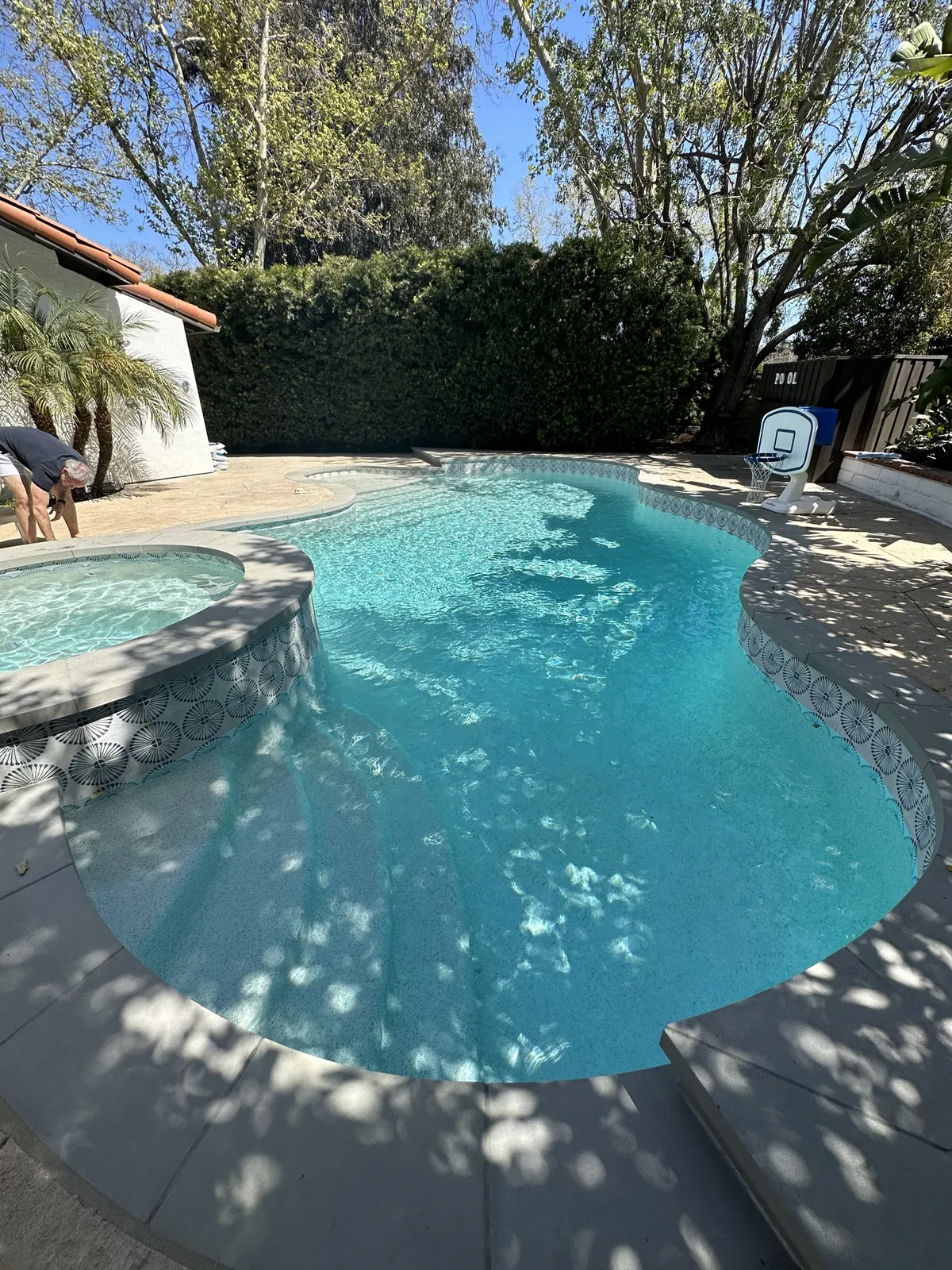
Keeping it looking new
Most early damage to a pool finish comes from chemistry, not age. Keep pH and calcium in range, brush the walls and steps regularly, and don't let leaves sit on the floor where they can stain. In areas with very hard water, a good pool service is worth it.
Pebble forgives small mistakes better than plaster does, but neither one likes being neglected. If you're not sure whether your pool needs a new finish or just a good acid wash and balance, send us a photo and we'll tell you honestly what we see.
Questions we get
Is pebble or plaster better for a pool?
Neither is better for everyone. Plaster is smoother and costs less up front; pebble lasts longer, hides stains better and handles hard water and sun. For a pool you plan to keep for many years, pebble is usually the better fit.
Does a pebble finish hurt your feet?
It feels more textured than plaster, especially in the first few months. Smaller pebble blends feel noticeably smoother, so if comfort matters we steer you toward those and let you feel the samples first.
How long does a replaster or pebble job take?
The finish itself goes on in one day. With draining, chip-out, tile or coping work and filling, plan on about a week or two before you're swimming, depending on what else is included.
Can you put pebble over old plaster?
Yes, as long as the old surface is sound. We chip out loose or hollow areas and prep the whole shell so the new finish bonds properly, whatever you choose.