By New Vision Builders team · Published · 5 min read
How they're built
Poured concrete is mixed, placed and finished on site as one slab, with steel inside and control joints cut in so it cracks where we want it to. Pavers are individual units, concrete or stone, set tight on a bed of sand over a compacted gravel base and locked in with an edge restraint and joint sand.
That's the whole story in one line. A slab is strong but rigid. Pavers are a flexible surface made of many small, strong pieces. Most of the pros and cons below come from that.
Cracking and repairs
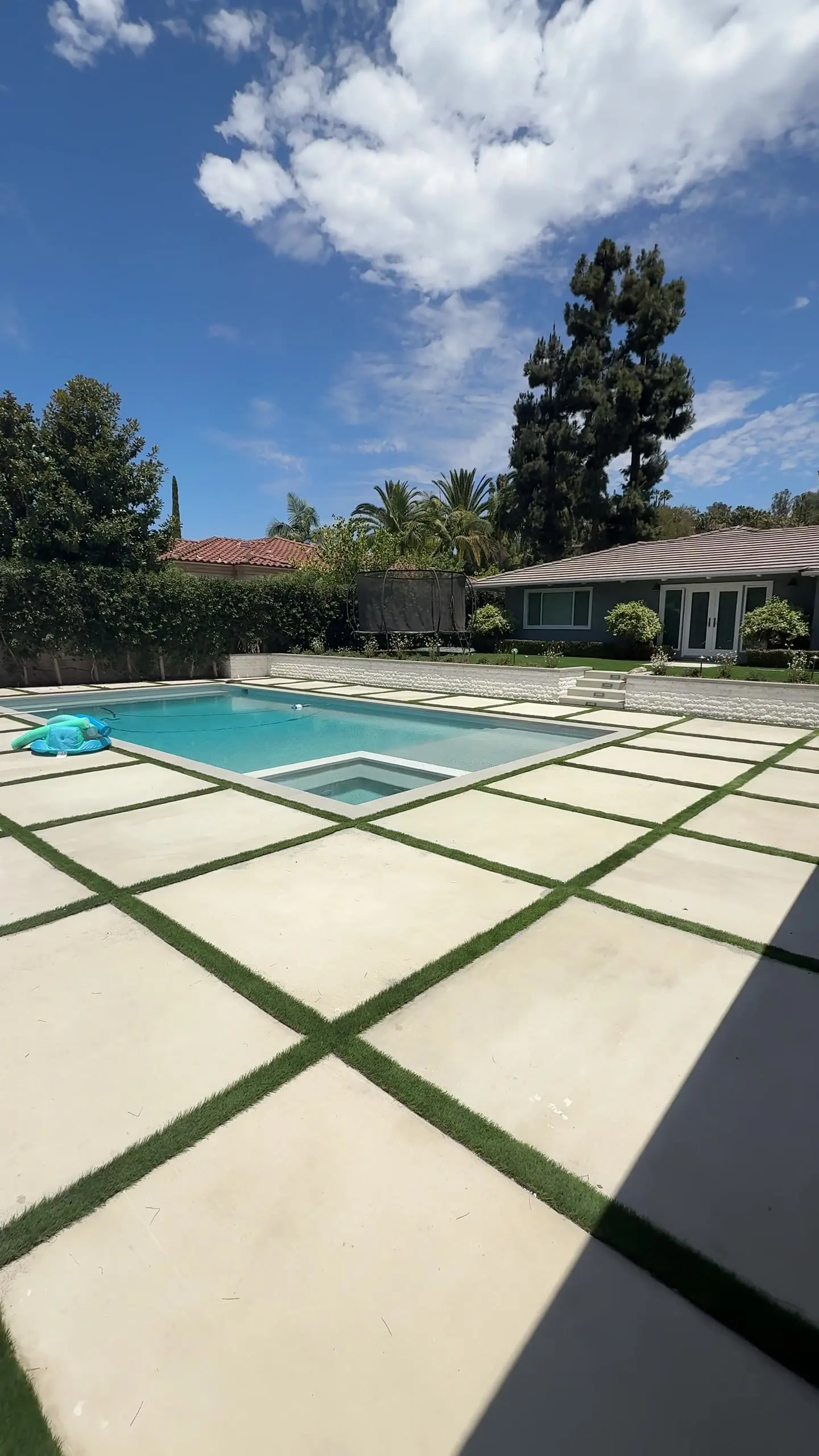
Every concrete slab cracks at some point. Good base prep, steel and well-placed control joints keep the cracks small and where they belong, but tree roots, settling soil and heavy trucks can still break a slab, and a patched crack never quite matches.
Pavers move with the ground instead of fighting it. If a root lifts a corner or a utility line has to be dug up, we pull those pavers, fix the base and put the same pavers back. There's nothing to match. That's a big reason we like pavers on driveways and on the clay soil you find in a lot of LA and OC neighborhoods.
- Concrete: rigid slab, cracks are controlled, not prevented
- Pavers: flexible, repairs are invisible
- Both depend on the base under them more than anything else
Looks and design
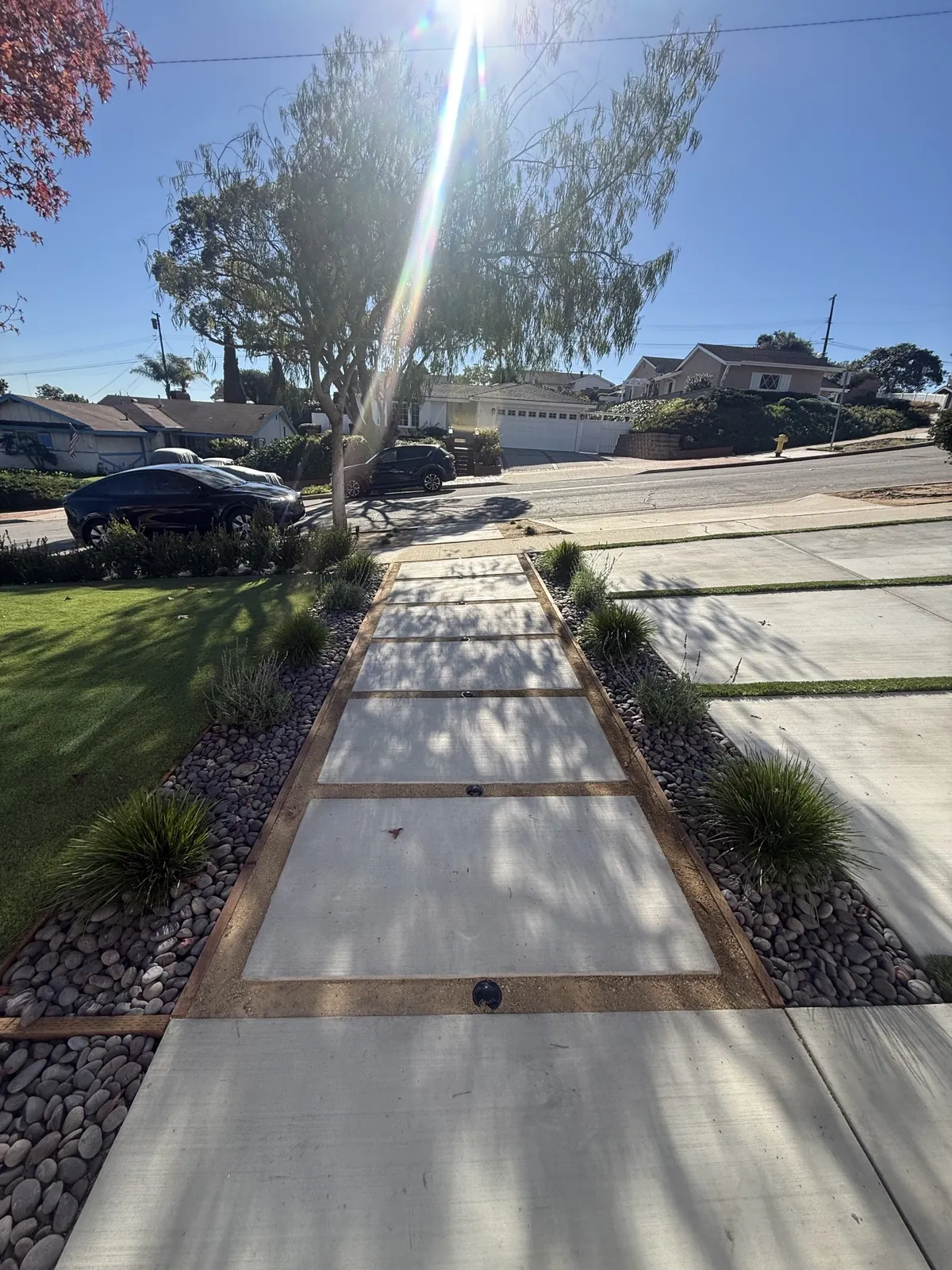
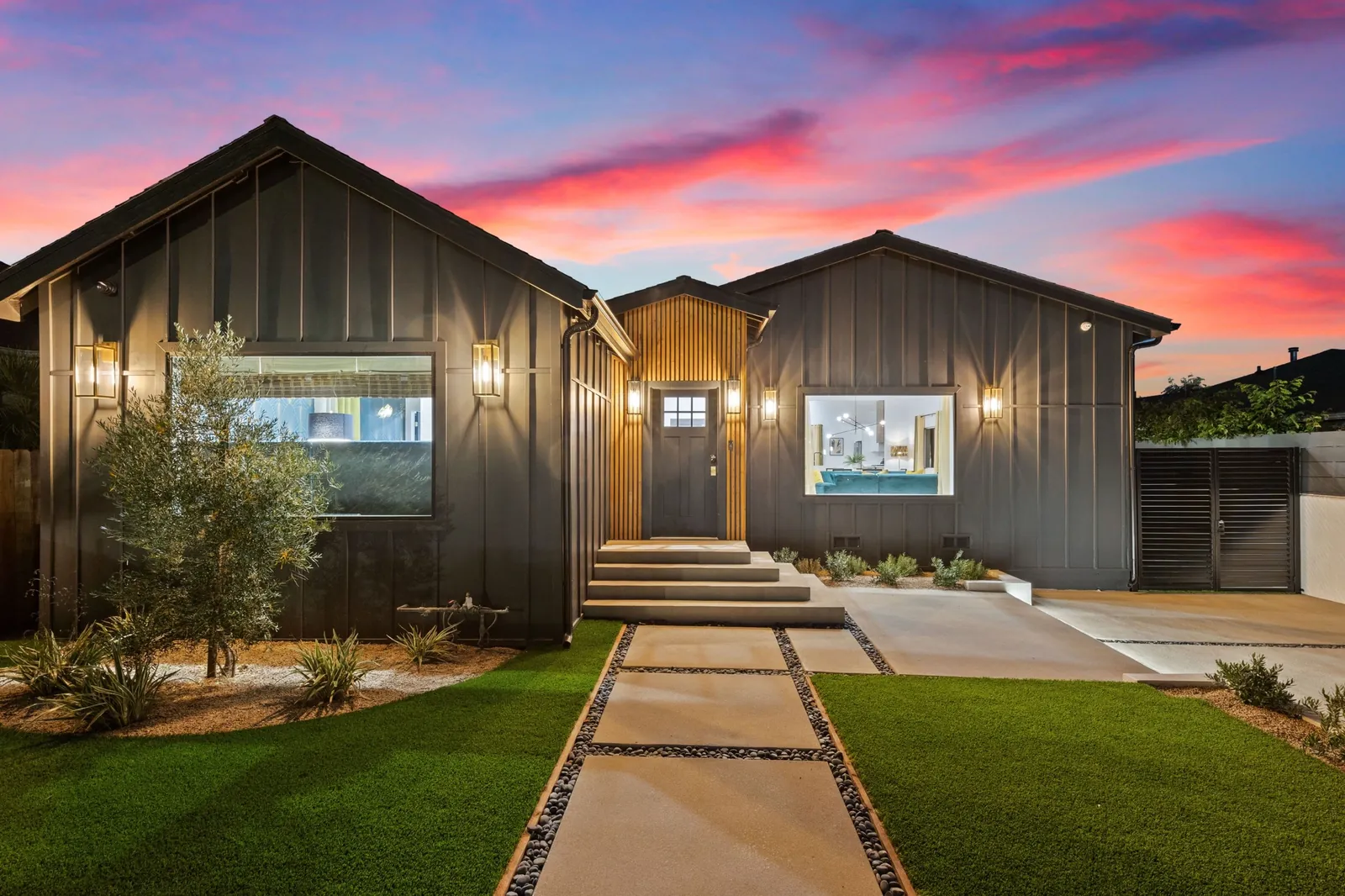
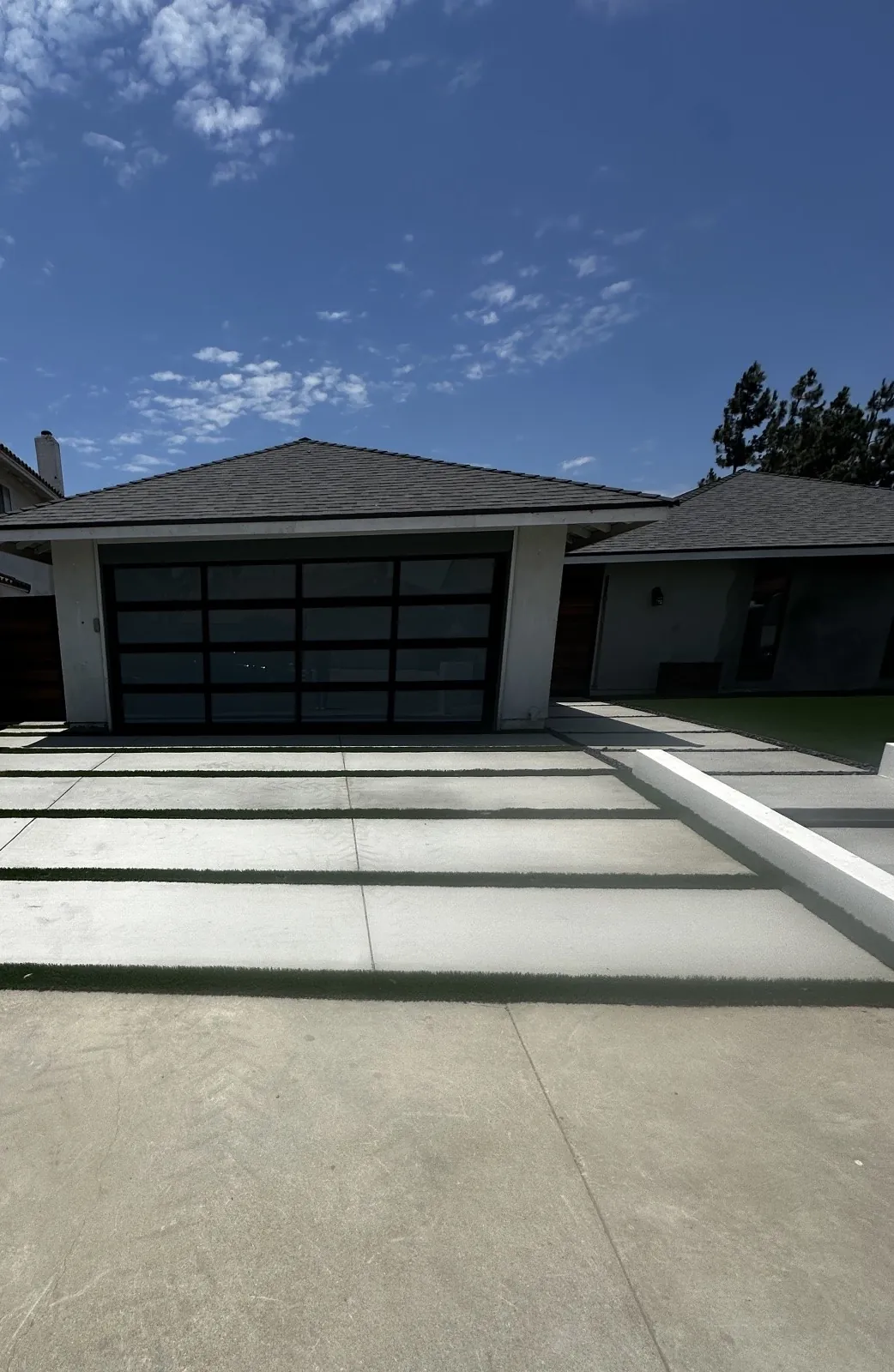
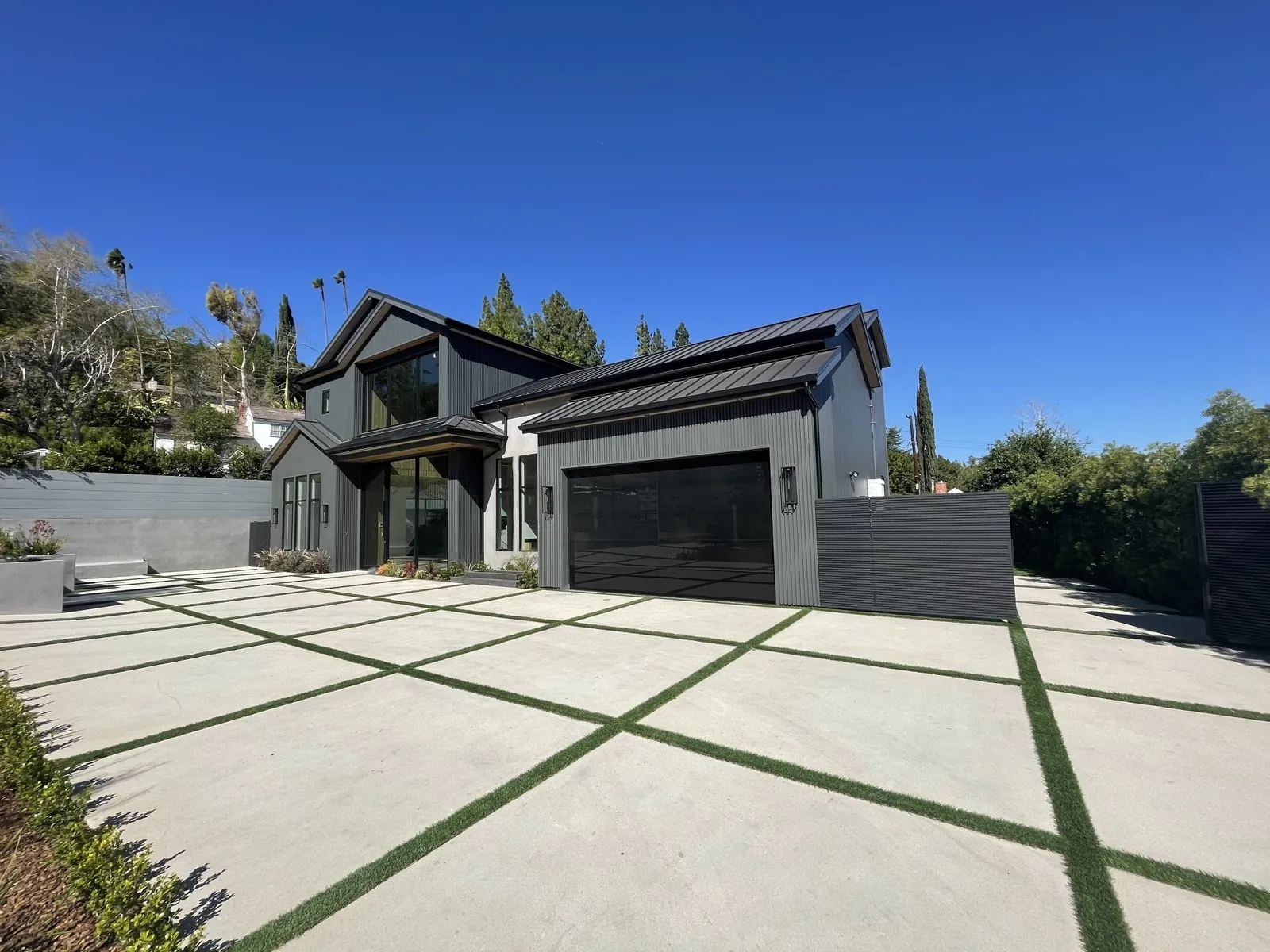
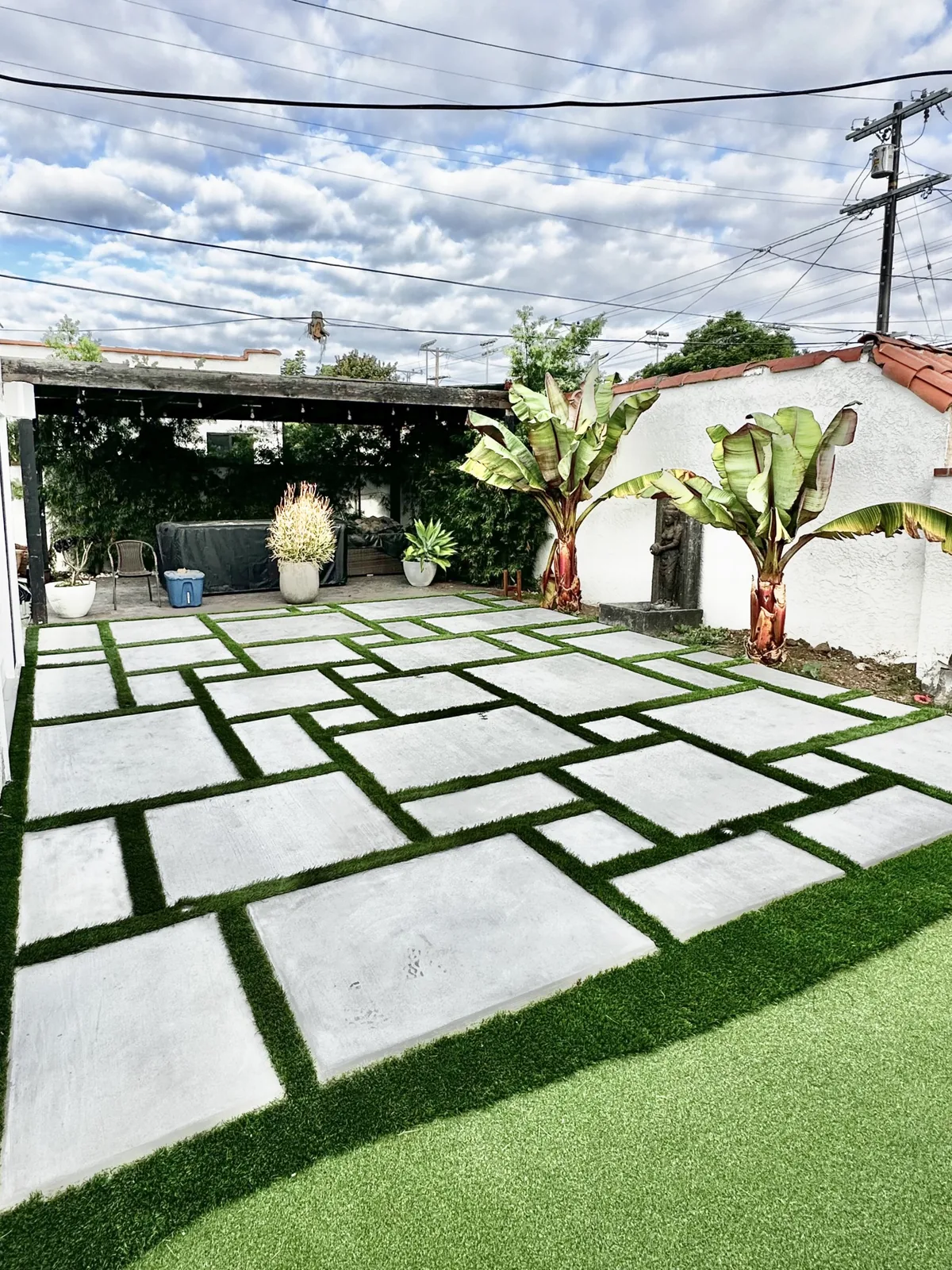
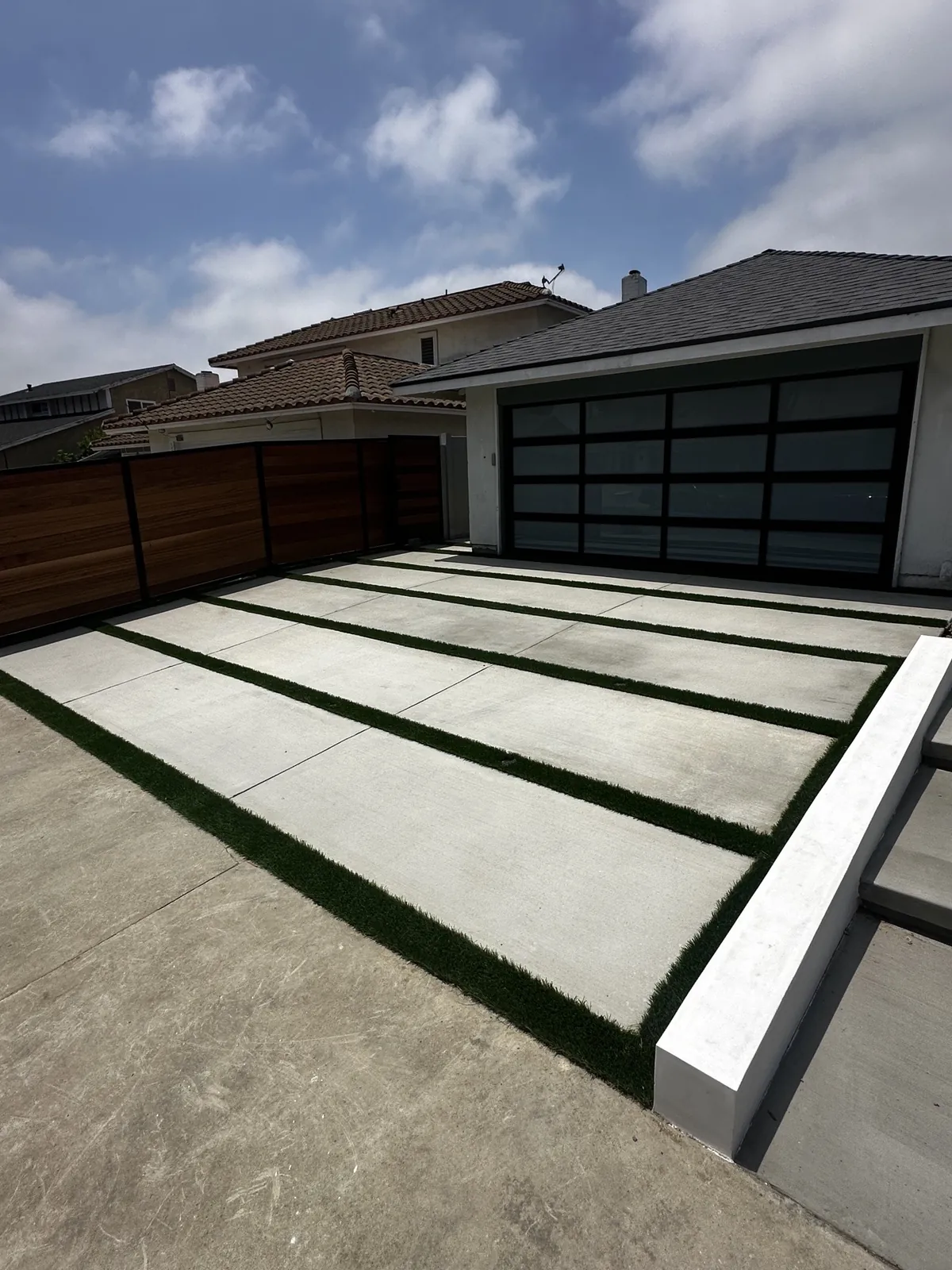
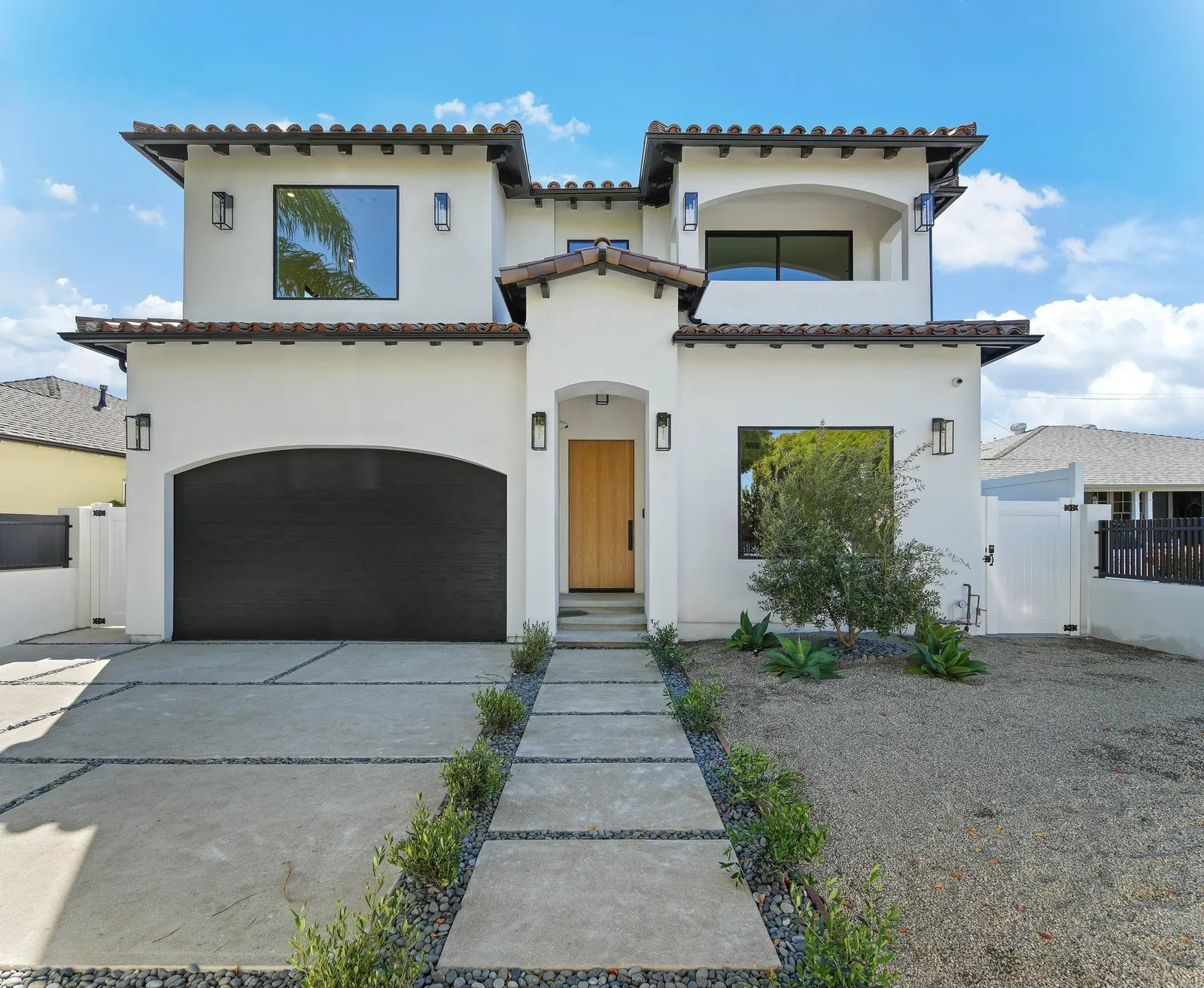
Concrete gives you the clean, modern lines a lot of new homes are built around. Large poured pads with turf, gravel or river rock between them are one of the most requested looks we build right now, for driveways, walkways and side yards. Finishes range from a light broom finish to smooth sand finishes and exposed aggregate.
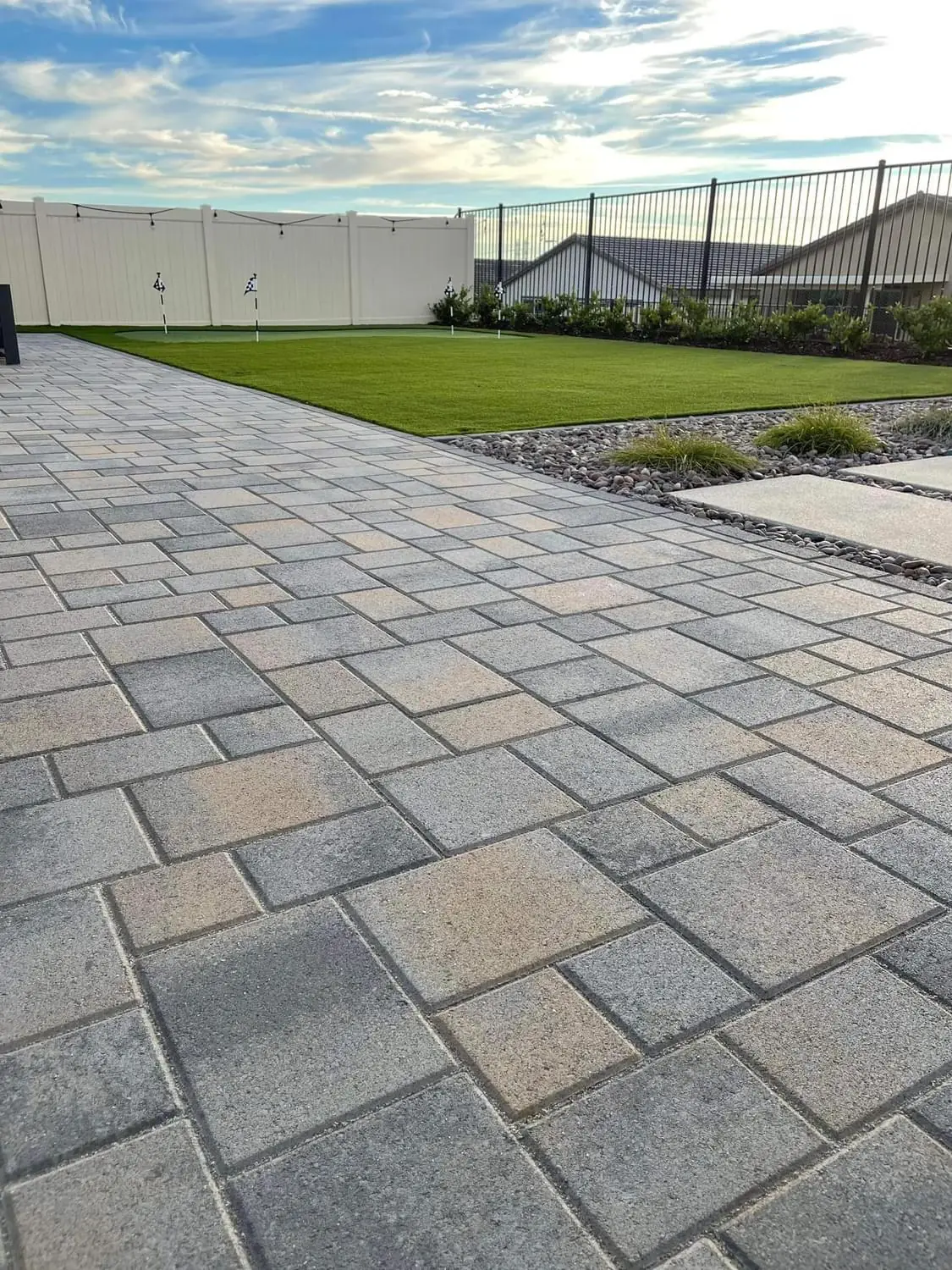
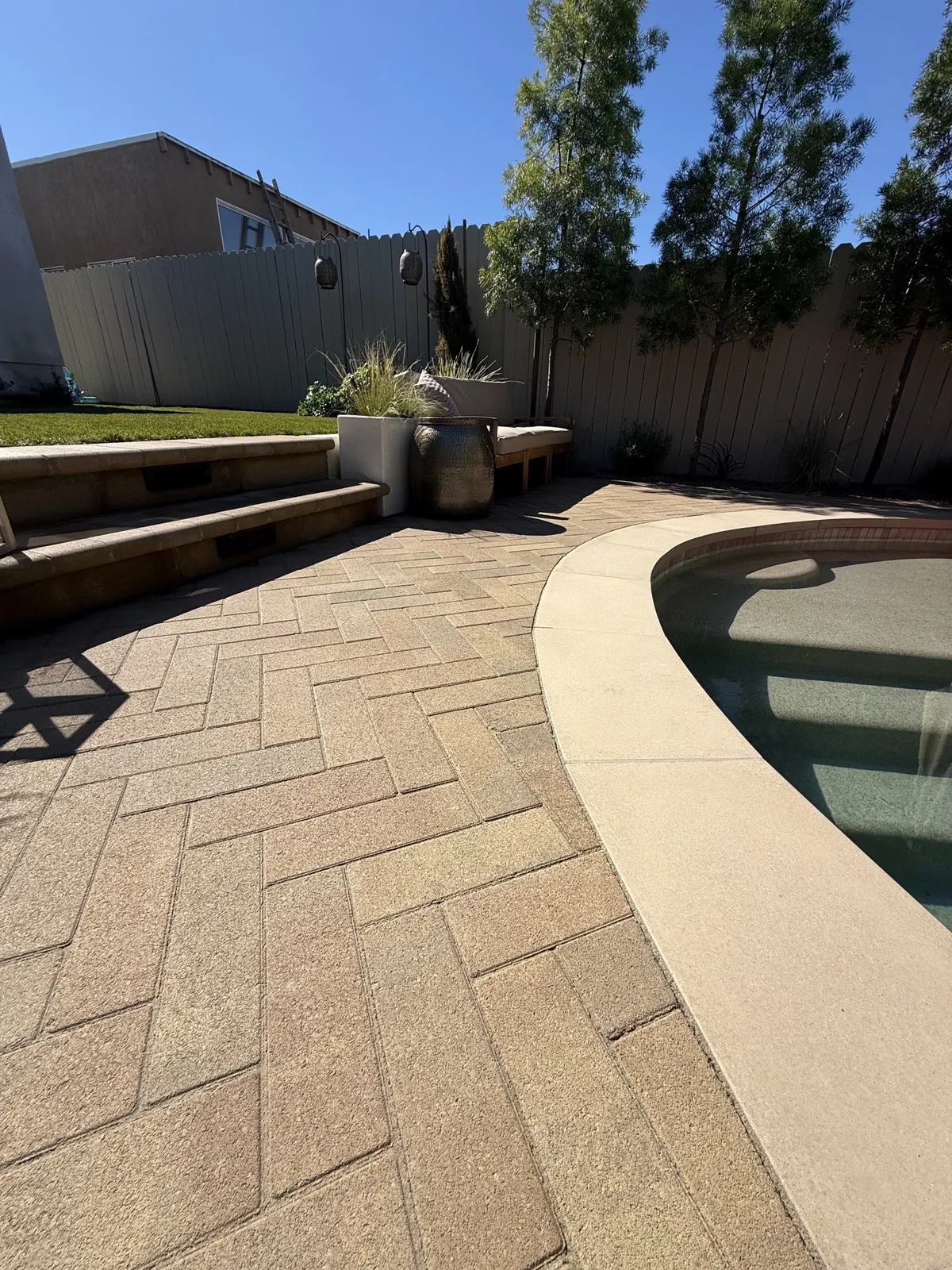
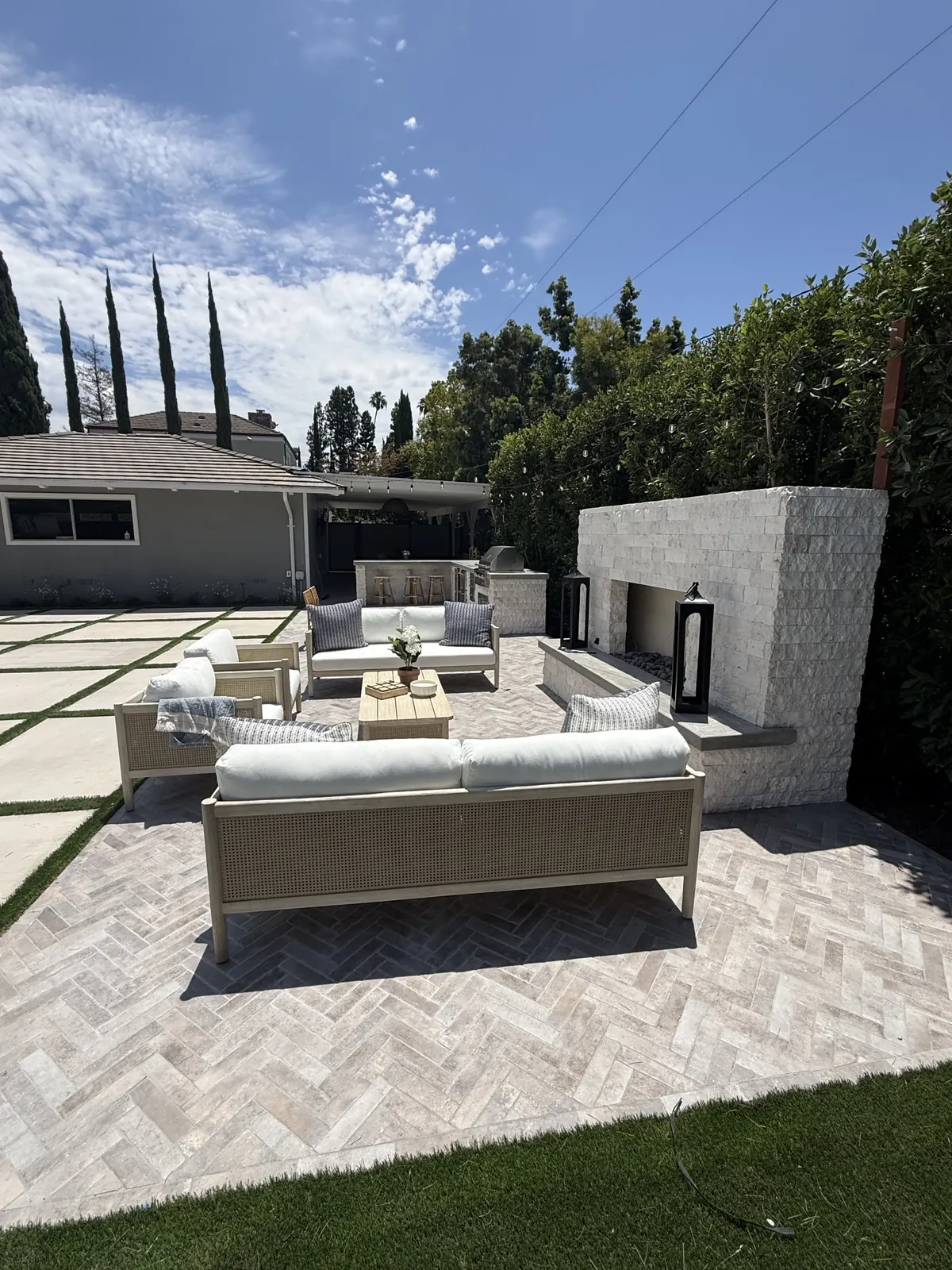
Pavers give you pattern and texture: herringbone, running bond, large-format slabs that read almost like concrete, or tumbled pavers for a softer, older look. Color runs through the whole paver, so it doesn't wear off. Borders and inlays make it easy to frame a patio or tie a driveway into the house.
Heat, water and drainage
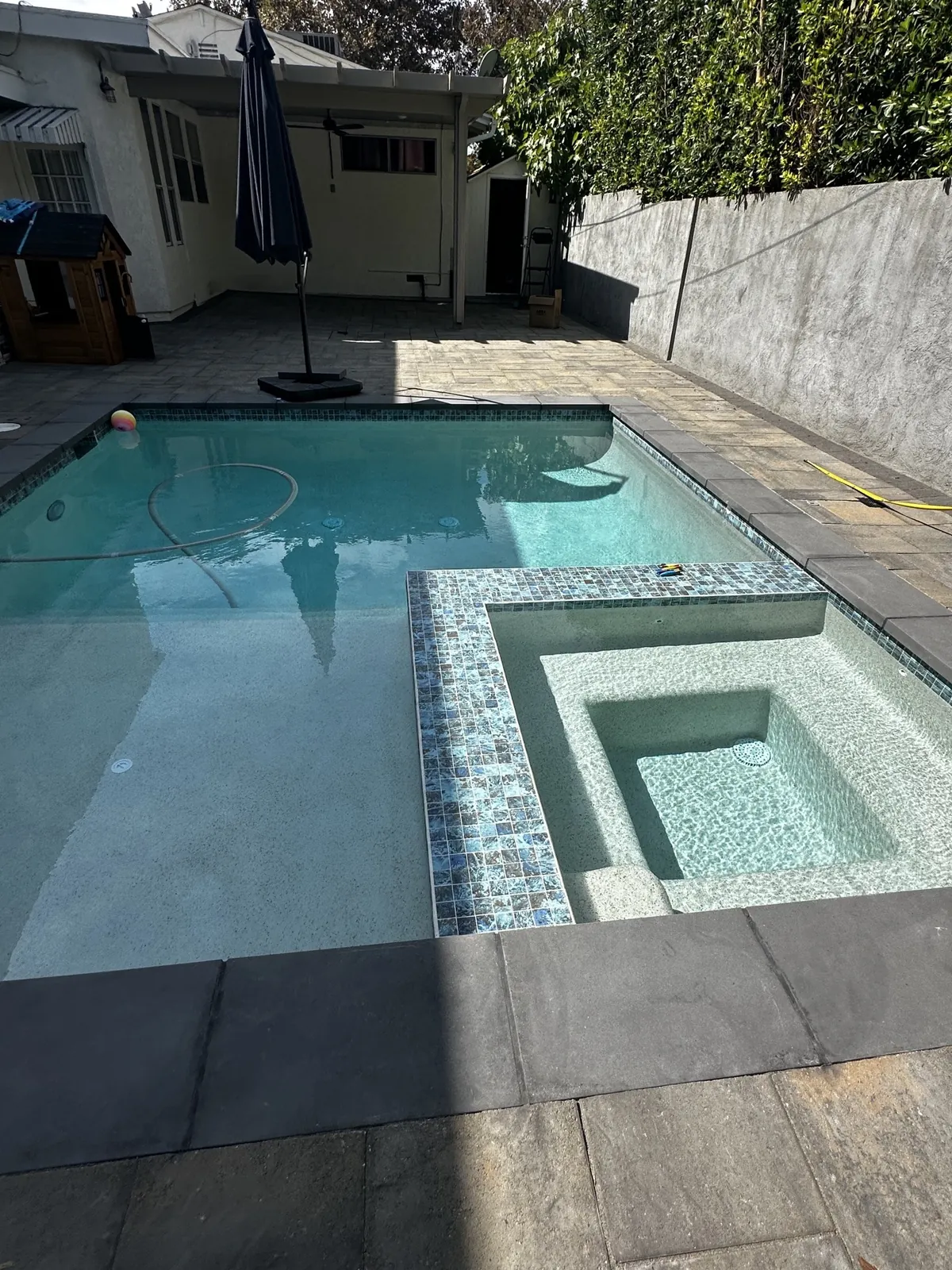
In our summers, surface temperature matters, especially around pools. Lighter colors stay cooler in both materials, and sand finishes on concrete are easier on bare feet than smooth ones. Around pools we often go with lighter pavers or a cool-deck style concrete finish.
Water has to go somewhere. A concrete slab sheds all of it, so the slope and drains have to be right. Standard pavers shed most water too, but permeable pavers with open joints let it soak into a special base, which can help with runoff and with some city requirements. Either way, we check where your water goes before we design anything.
Upkeep over the years
Concrete is close to no maintenance. Sweep it, wash it, and seal decorative finishes every few years if you want them to stay rich. Oil and rust stains are harder to get out of concrete than pavers, because you can't just swap the stained piece.
Pavers need a little attention to the joints. Polymeric sand holds the joints together and keeps weeds and ants out; topping it up and resealing every few years keeps the surface tight and the color strong. If a paver ever cracks or stains badly, we replace that one paver.
Up front vs. over time
Poured concrete usually costs less to install than pavers for the same area, because there are fewer steps and less hand work. Pavers take longer to lay, especially in patterns like herringbone, and the base is just as important as it is under concrete.
Over the years the picture can shift. A slab that cracks across the middle has to be lived with, patched or broken out and poured again. Pavers can be lifted and reset in the same spot. We walk you through both on the site visit and give you a clear written proposal for each option, so you can weigh them with real numbers for your own yard.
How we help you decide
On the site visit we look at the soil, the trees nearby, how the yard drains, what drives on it and the style of the house. Then we usually show both options in your 3D design so you can see them on your own home before you choose.
A simple rule of thumb: if you want a clean, modern look on stable ground, concrete is a great choice. If the driveway sees heavy use, the soil moves, or you want the option to repair without a patch, pavers usually make more sense. Plenty of yards use both, like a paver patio with concrete pads leading to it.
Questions we get
Are pavers better than concrete for a driveway?
Often, yes. Pavers flex with moving soil and roots instead of cracking, and damaged spots can be lifted and reset with the same pavers. Concrete is a good choice on stable ground when you want a clean, modern look.
Do pavers last longer than concrete?
With a properly built base, both last many years. Pavers usually age better because cracks and stains can be fixed one piece at a time, while a cracked slab stays cracked or has to be patched or replaced.
Do I need a permit for a new driveway or patio?
It depends on the city and the job. Changing the driveway approach at the street, adding a lot of new hardscape, or work that affects drainage can need a permit. We check the rules for your address and handle the permits when they're needed.
Can you mix pavers and concrete in one yard?
Yes, and it often looks great. A common layout is concrete pads with turf joints for the driveway and walkways, and a paver patio in the backyard. We design them together so the colors and lines match.